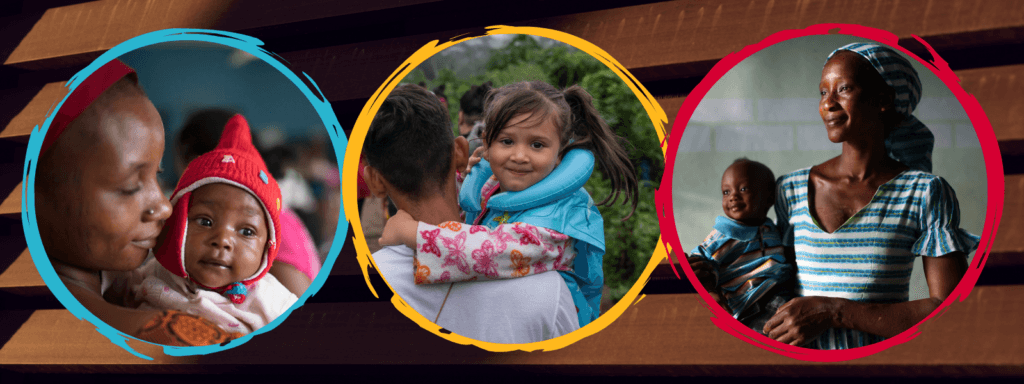
"The need is urgent. We cannot afford to wait. Together, we can and must deliver on the promise of better health and nutrition for all women, children, and adolescents, everywhere" - Austin Demby Chair, Minister of Health and Sanitation, Sierra Leone
A year ago, in a health centre in Kigoma, north-east Tanzania, doctors saved Dorcas’ baby, who was born underweight and faced life-threatening complications. She had planned to deliver at home, but trained health workers in her community recognized the danger, referred her in time, and ensured she reached the facility by ambulance. Without that chain of care, her child would likely have died.
Stories like Dorcas’ illustrate a larger truth: for decades, the world made steady progress in reducing child deaths, and since 2000, under-five mortality has fallen by more than half. The evidence is clear: access to essential health and nutrition services saves lives. And what has made that access possible and sustainable are government investments and health system reforms.
But this progress remains fragile.
As official development assistance declines, health facilities are closing, health workers are losing their jobs, and medical supply chains are being disrupted. Projections suggest that 2025 may be the first year this century in which child deaths increased, with 200,000 additional young lives lost compared to 2024, a sobering reminder of how quickly gains can be reversed.
The ask: As progress on women’s and children’s survival comes under increasing pressure and inequalities widen, we urge Canada to continue its longstanding support for the Global Financing Facility with an increased pledge for 2026-2030 (exact figure forthcoming).
why Canada must step up now
According to the Organisation for Economic Co-operation and Development (OECD), G7 countries, which together account for around three-quarters of all official development assistance, are set to slash their aid spending by 28% for 2026 compared to 2024 levels.
These cuts will hit the poorest countries and the most essential services hardest. At this rate, up to 16 million additional children could die by 2045.
Since the OECD’s numbers were released, Canada also announced $2.7 billion cut over 4 years to the International Assistance Envelope despite Prime Minister Mark Carney’s promise not to do so.
Cuts by the U.S. alone risk leaving up millions of children without essential health and nutrition services and cause over 4.5 million deaths of children under 5 years old by 2030. In other words, a child under 5 could die every 40 seconds by 2030.
By 2030, the projected child mortality rate will remain at 36 per 1,000 live births, missing the UN’s Sustainable Development Goal target of 25 child deaths per 1,000 live births.
With international assistance declining, many governments face limited fiscal space and rising debt burdens. Families are often forced to pay out-of-pocket for essential care, putting lifesaving services out of reach for the most marginalized children. This is why new approaches to financing child survival matter now more than ever.
enter the Global Financing Facility for Women, Children and Adolescents
With leadership from Canada in support of the G8 Muskoka Initiative, the Global Financing Facility (GFF) was launched in 2015 to accelerate efforts to end preventable maternal, newborn, child, and adolescent deaths by 2030. The GFF helps countries finance their own health priorities, particularly around child and maternal survival, by combining domestic resources with investments from other countries, the World Bank, and the private sector.
And it’s working.
All 36 GFF partner countries have reduced their levels of maternal and child mortality and adolescent births, expanded access to modern family planning, and three-quarters have reduced their rates of childhood stunting (low height-for-age caused by malnutrition).
how the GFF works
Country-led and efficient: The GFF connects funding from donors with national health plans, focusing resources on the most effective services for women and children.
Small grants, big leverage: Small GFF grants attract much larger World Bank financing, multiplying resources for health.
Cost-effective investment: For under $100 per person per year, strong primary health care can prevent up to 90% of child deaths. GFF countries are reducing mortality faster than the global average.
Stronger economies and trade partners: The GFF helps children stay healthy and stay in school. Healthier, better-educated populations are more productive over their lifetimes, expanding future workforces, consumer markets, and trade partners.
Transition from assistance to mutually beneficial partnerships: As countries grow and reduce mortality, many will transition out of GFF financing and re-engage as economic and knowledge partners.
Greater global stability: By supporting reliable, affordable health systems and job creation, the GFF help countries manage demographic and economic transitions, which reduce inequality, social unrest, and forced migration.
The GFF doesn’t replace international assistance – it multiplies it, helping countries build the health systems children need to survive and thrive. In Tanzania, support from the GFF and other partners has helped translate national plans into real services on the ground, ensuring that mothers like Dorcas and their children can access quality primary health care, even in the most remote communities.
Today, as global aid budgets are slashed and child survival gains are at risk of reversal, Canada has a critical opportunity to lead. Canada has a proud history of championing child survival worldwide. A renewed pledge to the Global Financing Facility would help partner countries provide:
Modern contraceptives for 254 million women and adolescent girls
Early antenatal care for 126 million pregnant women
Institutional deliveries for 194 million pregnant women
Early initiation of breastfeeding for 146 million newborns
Diphteria, tetanus and pertussis vaccination for 208 million children
Now is Canada’s moment to act. By renewing its support for the GFF, we can safeguard progress and give every child the chance to survive and to thrive.
The ask: As progress on women’s and children’s survival comes under increasing pressure and inequalities widen, we urge Canada to continue its longstanding support for the Global Financing Facility with an increased pledge for 2026-2030 (exact figure forthcoming).
latest campaign news
#WinTheFight
Canada pledged $1.02 billion to the Global Fund to Fight AIDS, Tuberculosis and Malaria at the Eighth Replenishment Summit in Johannesburg. This represents an almost 16% cut from its previous pledge in 2022. Results Canada alongside 20+ organizations released a joint statement expressing our concern as the announcement undermines progress against three of the world’s deadliest infectious diseases and weakens Canada’s credibility as a reliable global partner.
story
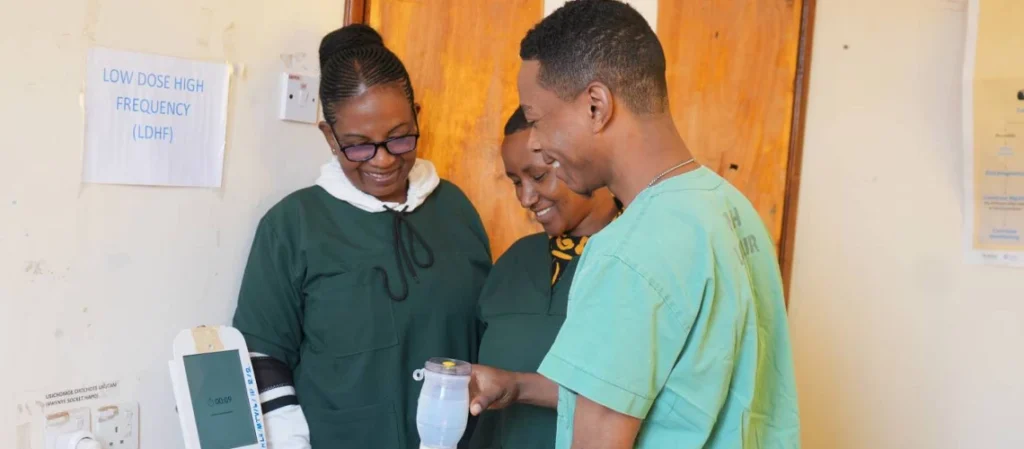
Photo: Safer Births
One of the most successful initiatives in Tanzania is the Safer Births Bundle of Care. This program, led by the Ministry of Health in collaboration with the GFF, ensures health workers have the skills and tools to manage common complications that can lead to maternal or neonatal deaths.
By unlocking World Bank funding to scale up this project, the GFF supported the Tanzanian Ministry of Health in its expansion of this project to over 150 facilities and enabled more than 4,000 health workers to receive training. Now, the plan is to reach all regions.
Reach out to your Member of Parliament by e-mail to introduce the Global Financing Facility and explain why it is a smart investment for Canada, especially at a time when resources are limited and global needs are growing.
Highlight how the GFF helps countries lead their own health priorities while making better use of every dollar invested. Be sure to emphasize the human impact of this approach, including how strengthening primary health care brings essential services closer to communities and helps save the lives of mothers and children.
Let your MP know that February 1st – 7th marks another International Development Week. This is a time for all advocates to come together and highlight the global efforts taking place to reduce poverty and promote sustainable development around the world.
Expert tip: Use the EPIC model of effective communication to get your message across clearly.
write a Letter to the Editor (LTE)
Use International Development Week (IDW) as a timely hook to write a letter to the editor (LTE) highlighting Canada’s leadership on child and maternal survival, including through the Global Financing Facility, which Canada helped launch in 2015. All the information is available in our call to action.
IDW offers a natural moment to remind decision-makers and the public that the GFF is an innovative model that maximizes the impact of every dollar Canada invests in international development by mobilizing domestic resources, donor funding, and World Bank financing. More importantly, it supports sustainable, country-owned health systems that ensure mothers survive childbirth and children grow up healthy.
Be sure to send your LTE to your local community papers for the best chance of being published! Refer to past volunteer LTEs but don’t fall into the trap of copying other people’s styles. Don’t forget to let us know you took action!
follow these step-by-step instructions to write an LTE
Volunteers on average spend 1-2 hours researching and planning, 30 minutes writing their draft, and 15 minutes submitting it to newspapers.
Research the current issue by reading the news or external reliable sources (e.g., the World Health Organization).
Draft your LTE. It doesn’t have to be perfect, and you don’t have to be an expert to have an opinion.
Create an outline of your letter using the EPIC format.
Keep it short – 150-200 words. Being clear and concise will increase your chances of getting published.
Focus on your perspective and speak from the heart while supporting your opinion with evidence from our call-to-action and/or your research.
Remember to state the problem early on and include a solution to the issue which is usually the “ask” in the call-to-action.
Write a catchy title that will draw the reader in.
Review your draft to make sure you are using respectful and inclusive language – see our anti-oppression best practices.
Decide if you are sending your LTE to one or many newspapers. If you’re emailing multiple newspapers, put their addresses in the BCC field. Use our database of editors’ emails for options.
Press ‘send’ – congratulations! Be sure to let us know you’ve submitted an LTE through our reporting form or tell your Group Leader. If you are not part of a group, contact us at action@resultscanada.ca. If you are not a volunteer yet, join us!
Do an internet search of your name and a key sentence from your LTE for a few weeks after you submit if the newspaper editor didn’t notify you that they picked up your LTE.
If you got published, complete the “I got published in the media” form.
Respond to a recently published article as a hook for your LTE.
Collaborate with other volunteers. Nothing is stopping you from submitting a co-written LTE!
Speak another language? Send your LTE to community newspapers published in that language.
Consider writing an op-ed if you have lots of research material and 200 words isn’t enough!
special TB action: turn a landmark red
In a time of growing global health challenges, raising awareness about critical health issues is key to building healthier, more resilient communities, and reducing extreme poverty. Raising awareness about tuberculosis (TB) is a powerful way to highlight the urgent need for strong health systems that protect the most vulnerable. TB remains the world’s deadliest infectious disease, and shining a light on it shows how investing in health priorities saves lives, strengthens communities and helps break the cycle of extreme poverty.
World Tuberculosis Day takes place on March 24, but preparations begin well in advance! One of the key activities is to illuminate buildings and monuments in red to draw attention to TB. This annual initiative has a tangible impact – last year, a record of 56 landmarks across Canada were lit up, demonstrating the power of collective action. Because approvals from the monuments and landmarks can take several weeks, and sometimes months, early action is essential.
You can help make tuberculosis impossible to ignore. Submit a request to have a monument in your city, or another Canadian city, lit up in red on March 24 and help shine a spotlight on the fight against TB.
How to begin
Start by selecting a Canadian landmark that accepts requests for commemorative lighting by checking their website and consulting last year’s list for inspiration. Confirm that you are the sole person submitting the request for that site. Then, look into the approval process for your municipality or monument and formally request red lighting in recognition of World TB Day. Then repeat the process with more landmarks!
For step-by-step guidance and tips on identifying a landmark and on preparing your request, consult our guide.