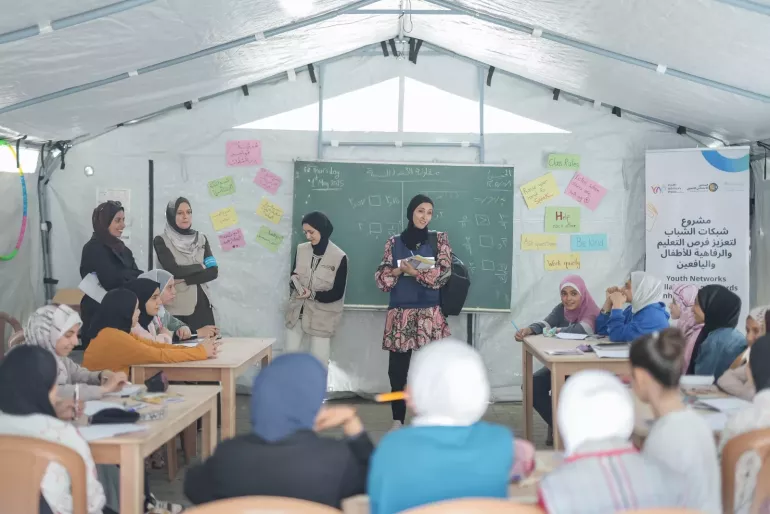
“Even amid war, education remains the thread that weaves hope into children’s lives.” – Ola A. A. Alaila, UNICEF Education Officer, Gaza, State of Palestine
September is a month of fresh starts. After a long summer, holidays are over, and many are heading back to work with new energy: Members of Parliament (MPs) and Senators head back to Parliament for new debates, and students back to school with new expectations.
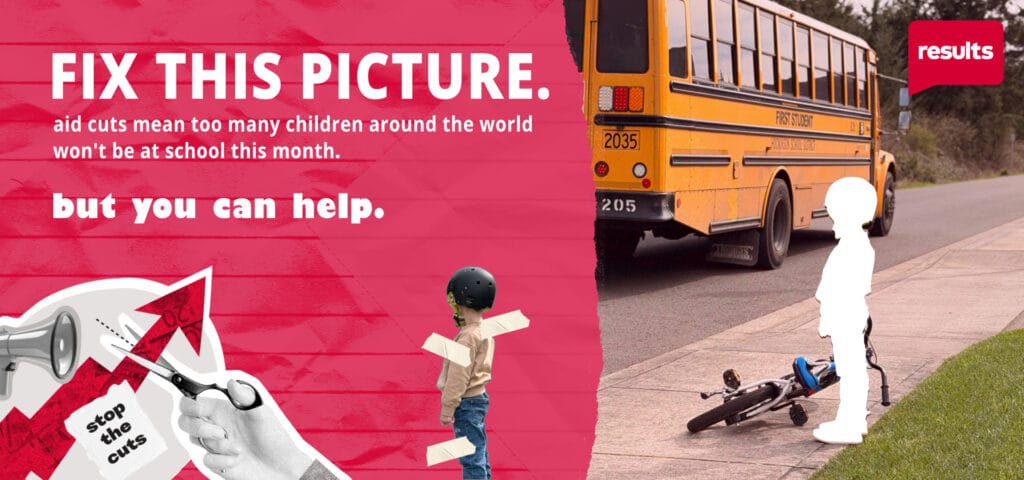
We might think that the image of a child excitedly hurrying to their first day of school is commonplace at this time of year, but for more than 273 million children around the world, this September will be the start of another school year missed. In fact, more children are out of school now than at any point since the Second World War.
The ask: We call on Canada to stop cuts to international aid in Budget 2026 and reinvest in our world.
why are so many children out of school?
A growing number of overlapping crises are keeping children from the classroom. Around the world, these are making it harder for children to enter school, stay in school, and get the quality education they deserve:
Conflict and displacement often mean the end of schooling: War and instability destroy schools, displace families, put students and teachers at risk, and can interrupt a child’s education for years. Over 93 million school-aged children affected by crises are entirely out of school.
COVID-19 left lasting effects on education. Pandemic school closures caused enormous disruptions to learning. Many children fell behind, faced increased economic pressures at home, or left education systems and never returned.
Poverty and inequality continue to determine who gets to learn. When families are struggling to afford food, housing, transportation, or school costs, education can become inaccessible. Children may also be pushed into work early or given caregiving responsibilities to support families financially.
Climate change is increasingly disrupting learning. Extreme heat, floods, droughts, storms, and other climate-related disasters are closing and damaging schools and disrupting entire communities. In 2024 alone, climate events interrupted schooling for at least 242 million students across 85 countries and territories.
Gender-based barriers continue to keep children (especially girls) out of the classroom.Child marriage, gender-based violence, household and caregiving responsibilities, inadequate sanitation facilities, and discriminatory social norms can all prevent girls from starting or completing their education.
Global cuts to international assistance – including last year’s devastating cuts from Canada – are putting already strained education systems under even greater pressure and contributing to declining education spending worldwide. Low- and lower-middle-income countries are projected to lose 25 percent of aid to education by 2027. Recent data shows that aid for basic education has fallen to 30 percent of total education foreign aid. Cutting international assistance is a choice – one that Canada must not make again in this budget.
Cutting programs that help children around the world learn is a shortsighted decision for Canada because strong education systems can help reduce inequality, strengthen social cohesion, and build economies. In fact, investing in education is one of the smartest ways to build economic opportunity today: with every additional year of schooling increasing individual earnings by nearly 10%. Education is also an investment in peace: one additional year of education can reduce the risk of conflict by up to 20%, while stronger education systems help build more cohesive and resilient societies.
why now and why the budget?
If we want Budget 2026 to reflect us, our values, and our belief that children everywhere deserve access to quality education, we need to ensure that decision-makers in Canada know that people in this country care and want to see a better world. That is why we are calling on all our advocates and partners to raise their voices this September ahead of the budget.
With the US gutting foreign aid under President Trump in 2025, Canada must not follow suit and copy their misguided policy decisions. Especially when Canada has a legacy of global partnership, peacekeeping missions, and humanitarian assistance to build on.
To learn more about why September is so important for our budget advocacy, check out our blog advocating for aid.
If you are especially interested in how devasting cuts to education have been check out this case study on the state of education in Afghanistan since the massive global aid cuts in our budget toolkit.
Until Budget 2026 is be released in October or November, we will take action together to let our Members of Parliament and the Minister of Finance know that Canada must stop cuts to international assistance. From September 12-19th, we will be joined by hundreds of other like-minded volunteers, partners, and allies from across Canada for a week of action where we will be calling our MPs to advocate for a stop to the cuts in Budget 2026.
The ask: We call on Canada to stop cuts to international aid in Budget 2026 and reinvest in our world.
latest campaign news
Secure The Future
Thank you to all our volunteer advocates who took action as part of the Secure the Future campaign in support of the 100 Days Mission and the Coalition for Epidemic Preparedness and Innovations. Together, you wrote 184 letters to the editor, got 45 published, and contacted 31 parliamentarians directly. That is real, sustained pressure decision-makers cannot ignore!
This work matters right now. The current Ebola outbreak is a reminder that the next health emergency is never far away, and the countries that invest in preparedness today save lives – and money – tomorrow. Your advocacy is working. In our recent engagements with government, we are hearing that decision-makers are listening and taking note of just how consistent this pressure has been. We will continue to push Canada to show up at key moments, including the UN High-Level Meeting on Pandemic Prevention, Preparedness and Response this September, with a real commitment, not just a statement.
video
UN Messenger of Peace Malala Yousafzai speaks with Annemarie Hou, Executive Director of the United Nations Office for Partnership.
Malala called on world leaders to make schools safe for girls and protect every child's right to learn, saying that “if you are serious about creating a safe and sustainable future for children, then be serious about education.”
story
Meet Ola A. A. Alaila, an Education Officer in Gaza
“I chose to work in education because it is the cornerstone of hope and resilience for children, especially in times of crisis. Since childhood, I have dreamed of helping children unlock their potential and transform their futures through learning.
“As a Palestinian living in Gaza, even amid war, education remains the thread that weaves hope into children’s lives. I vividly remember visiting a burned-out building where a temporary learning space had been set up. Despite blackened walls and reminders of devastation, the classrooms were bursting with life. Children sat eagerly on small chairs, voices echoing in unison, faces lit with smiles – as if the war raging outside had vanished.
“Every lesson taught is a step toward rebuilding not just a child’s future, but the future of their community. This is why I work closely with teachers and partners to strengthen skills, introduce new teaching methods, and create safe spaces for learning. If we don’t support education in emergencies, we risk losing a generation’s potential, and their ability to build a peaceful future.”