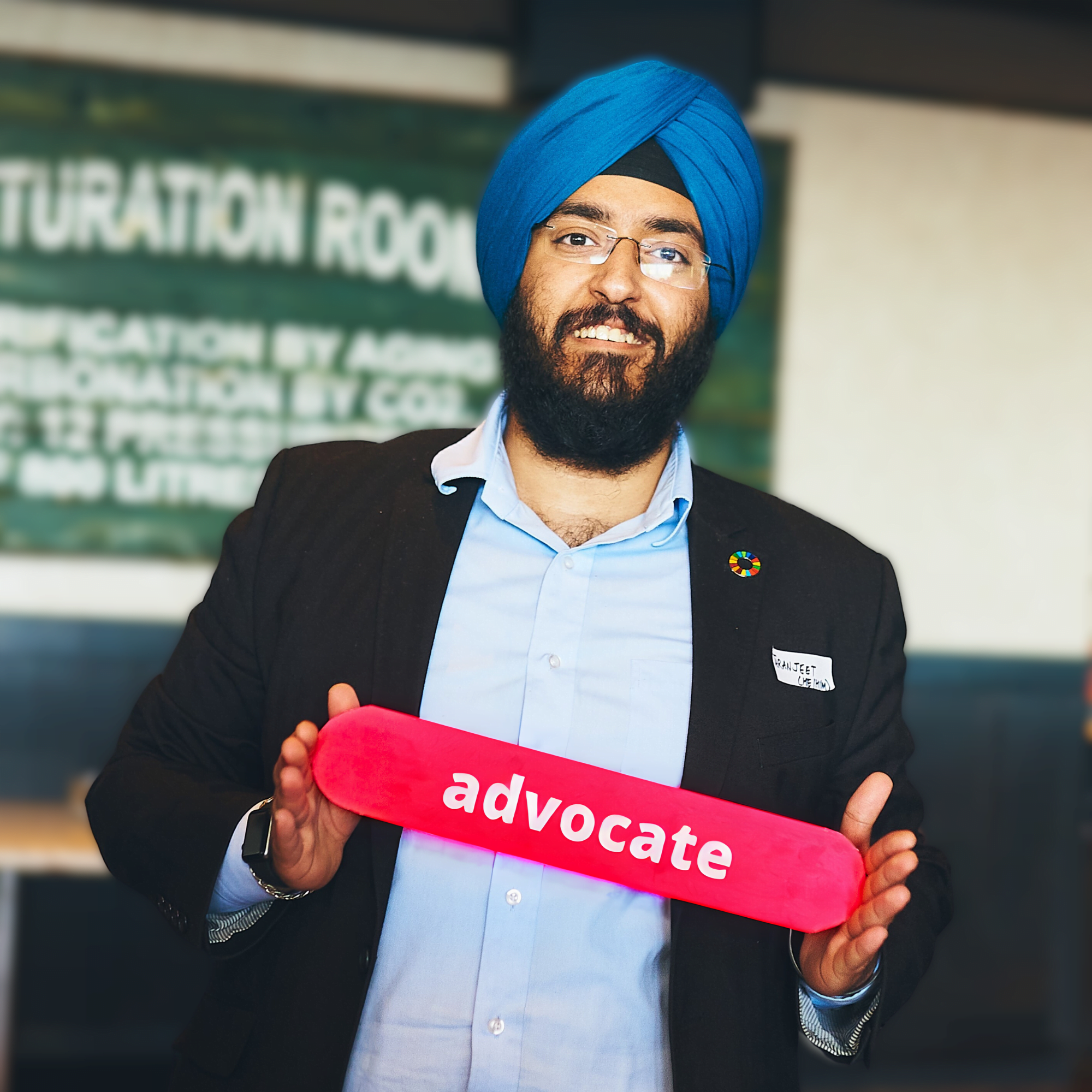





Earlier this month, Results Canada had the privilege of welcoming Zambian global health advocate Maxwell Mumba to Ottawa, bringing a powerful, firsthand perspective to some of today’s most urgent global health challenges.
Over the course of a dynamic week, Maxwell met with government officials, parliamentarians, partners, and grassroots advocates, sharing stories, evidence, and a clear message: now is not the time to step back from global health leadership. It’s time to double down.
Maxwell’s journey into advocacy began on the frontlines, as a peer educator and counselor supporting children living with HIV. There, he saw something that data alone can’t capture: health challenges don’t exist in isolation. HIV, nutrition, and access to care are deeply interconnected – and the solutions must be too.
Today, through his work with CITAM+ and as a member of Unitaid’s community delegation, Maxwell champions community-led approaches that improve health outcomes, especially for women and children. His voice carries both expertise and lived experience, making it impossible to ignore.
Maxwell’s visit began with a powerful roundtable on cervical cancer elimination, co-hosted with the Canadian Partnership for Women and Children’s Health, that included expert participants from civil society, Gavi, the Global Financing Facility, Unitaid, the Canadian Partnership Against Cancer, Health Canada, Global Affairs Canada, and Queen's School of Medicine.


Grounding the discussion in the realities of Zambia and Malawi, he highlighted a persistent and deadly barrier: stigma. Too many women are still unable – or unwilling – to access screening and treatment for both HIV and cervical cancer because of fear and discrimination.
But his message wasn’t just about the challenges. It was about solutions.
Community-led programs, integrated health services, and expanded HPV vaccination can change the trajectory, even in low-resource settings.
The takeaway was clear: progress is possible when care is connected, inclusive, and rooted in communities.
At the Global Cooperation Caucus, Maxwell addressed 4 parliamentarians from across party lines alongside Luc Laviolette, Head of the Global Financing Facility’s Secretariat.

Maxwell’s message was urgent: Cuts to official development assistance aren’t abstract, they’re already being felt. Outreach programs are shrinking. Diagnoses are delayed. Prevention efforts are weakening, especially in remote communities.
He emphasized that Canada can help turn this around, as long as communities are active partners, not passive beneficiaries.
At a parliamentary lunch & learn on nutrition, co-hosted with Action Against Hunger Canada, Maxwell helped draw a critical connection: strong health systems depend on strong nutrition systems. And vice versa.
Without sustained, integrated investment, progress cannot scale and it cannot last. His call was simple but powerful: invest in systems that work together, not in silos.


Across 3 meetings with Members of Parliament and a conversation with health and nutrition teams at Global Affairs Canada, Maxwell delivered a consistent, compelling case for the Global Financing Facility:
Using Zambia as an example, he demonstrated how the GFF doesn’t just fund programs, it transforms systems.
One of the most energizing moments of the visit came when Maxwell met with Results Canada’s grassroots volunteers in Ottawa.
What followed was an open, honest exchange about advocacy, lived experience, and what it takes to create change.

It was a reminder that advocacy isn’t just about policy, it’s about people. And when voices from different parts of the world come together, the impact is amplified.
For many in the room, it was a renewed sense of purpose and a call to keep pushing for bold, evidence-based solutions.
Maxwell’s visit made one thing clear: progress is real, but it is fragile.
Through the Global Financing Facility, partner countries have already:
This is a proven model. It saves lives, builds stronger economies, and creates more stable futures.
But with global aid cuts accelerating, including among G7 countries, this progress is under threat. Millions of children risk losing access to essential services. Preventable deaths could rise.
This is a critical moment, and Canada has a choice to make.
Results Canada is calling on the government to show leadership by making an early pledge of $340 million over five years to the Global Financing Facility at the upcoming World Bank–IMF Spring Meetings in April.
Because the truth is simple:
Investing in global health isn’t just the right thing to do, it’s the smart thing to do.
Maxwell’s visit was more than a series of meetings. It was a wake-up call, and a window of opportunity.
Now, it’s up to all of us to act.
Help us protect progress. Help us save lives. Help us build a healthier, more equitable world. Join us today.