






Canada has long been a quiet leader in global health innovation. But at a time when pandemics, drug-resistant diseases, and fragile health systems threaten lives and economies everywhere, Canadian leadership in research and development is no longer just a point of pride, it is a lifeline for people in Canada and around the world.
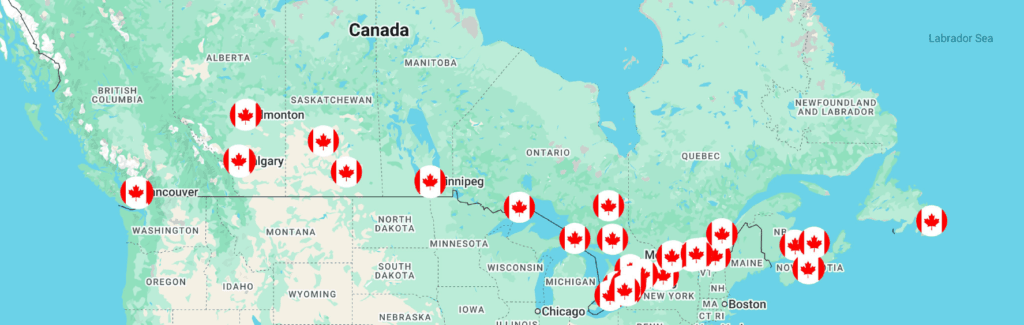
Across the country, Canadian researchers, businesses, universities, and health organizations are hard at work developing cutting-edge innovations that support people, save lives, and strengthen communities around the world. From vaccines and diagnostics to disease surveillance and tuberculosis research, made-in-Canada solutions are reaching people who need them most and helping shape the future of global health security while strengthening Canada’s economy, security, and research ecosystem.
Canadian organizations are already demonstrating what this leadership looks like in practice:
Check our map to find out more about these and many other Canadian innovators.
At the height of COVID-19, the world paid a devastating price for being unprepared. An estimated 15 million people lost their lives, and the global economy lost trillions of dollars. In a more interconnected world facing growing funding pressures and rising geopolitical instability, the question is no longer whether another pandemic will happen, but when.
That is why investing in global health research and development must be understood as a core pillar of Canada’s economic and national security.
The next pandemic will not wait. The global 100 Days Mission aims to ensure vaccines, diagnostics, and treatments can be developed and deployed within 100 days of identifying a new threat, dramatically transforming how the world responds to outbreaks before they spiral into global crises.
Achieving this goal requires sustained investment in the systems and organizations driving innovation forward.
The Coalition for Epidemic Preparedness Innovations (CEPI) has already supported more than 50 vaccine candidates and over 25 platform technologies designed to accelerate rapid-response vaccine development. CEPI’s work contributed to saving an estimated 2.7 million lives during the COVID-19 pandemic and has been guided by a commitment to ensuring that life-saving vaccines reach all countries equitably, not just those that can afford them.
Canada now has an opportunity to help secure the future by investing $125 million over five years in CEPI 3.0 and championing the 100 Days Mission. This investment would not only strengthen global preparedness but also bolster Canada’s own vaccine research, biomanufacturing capacity, and innovation ecosystem.
Pandemic preparedness also means addressing existing epidemics that continue to threaten lives and health systems worldwide.
Tuberculosis (TB) is the world’s deadliest infectious disease, claiming 1.25 million lives every year despite being preventable and curable. Drug-resistant TB is rising, millions of people continue to be missed by health systems, and existing diagnostic and treatment tools remain outdated. TB also affects Canada, disproportionately impacting Indigenous, northern, and newcomer communities.
Canada can play a leading role by investing $130 million over three years in TB R&D to accelerate the development of better diagnostics, treatments, and vaccines. Supporting organizations like Unitaid, TB Alliance, FIND, and IAVI would help drive progress against TB while strengthening the global systems needed to detect, prevent, and respond to future pandemics.
Global health innovation supports thousands of skilled jobs across Canadian universities, laboratories, biotech firms, and manufacturers. It attracts international partnerships and investment, strengthens domestic research and production capacity, and positions Canada as a leader in one of the fastest-growing sectors of the global economy.
Preparedness is also smart economics. Investing in pandemic prevention is estimated to generate massive returns by reducing the likelihood, cost, and disruption of future outbreaks.
In an increasingly uncertain world, global health investments are not separate from Canada’s national interests. They are central to them.
Canada has the talent, expertise, and institutions needed to lead. What is needed now is sustained political commitment to invest in the Canadian innovations and global partnerships that are already saving lives, strengthening economies, and building a safer future for everyone.
Because when Canada invests in global health, Canada invests in itself and in the communities, here and around the world, that share in that future.