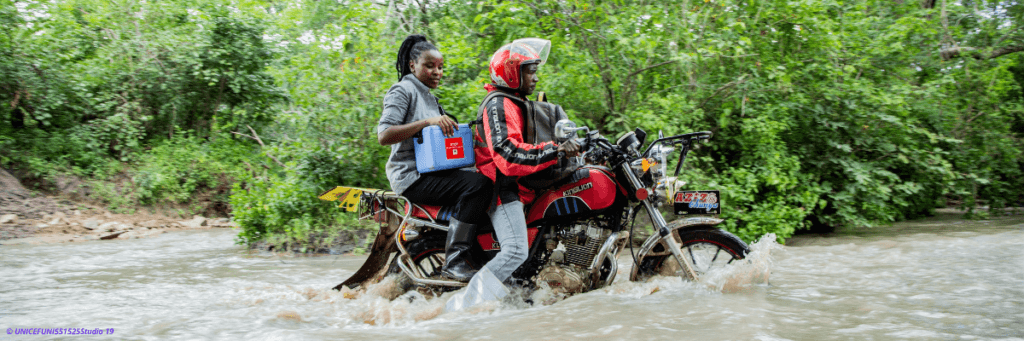
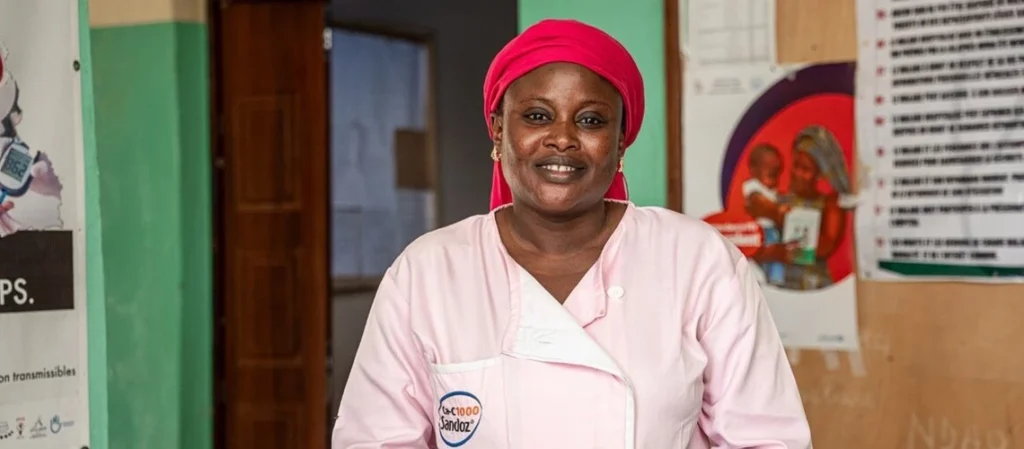
“We are the eyes and ears of our population, and we know what’s going on in every family. We are a fundamental part of the community: we restore the confidence of families and give them access to essential services.” - Blanca Flor Rosales Borrego, Community Health Worker, Peru
In Zambia’s Nchelenge district, Dygrace Lukwesa walks from door to door across villages in her community, treating sick children, delivering babies safely, and teaching parents how to protect their families from malnutrition. In these remote communities, Dygrace is more than a health worker. She is the lifeline that keeps families alive and connected to the care they desperately need – one everyone knows and trusts with their future.
But since the drastic and sudden funding cuts from the United States Agency for International Development last year, Dygrace and many of her colleagues have not been paid for their work. Like many frontline health workers, they are deeply committed to the communities they serve, but they also have families of their own to support. Without compensation, some are forced to make the heartbreaking decision to step away from lifesaving work to earn income and feed their children. When that happens, the fragile bridge between isolated communities and already overstretched health systems grows weaker.
For every $1 invested in their national community health worker programs, governments can yield up to a $10 return on investment. But when community health workers are unable to do their jobs, the costs are immediate and profound. Each missed day means children go unvaccinated, pregnant women lack essential support, and malnutrition can go unnoticed. Diseases spread more easily, preventable deaths increase, and decades of progress in maternal and child health risk being undone.
This is why sustained investment in frontline health workers matters.
The Global Financing Facility (GFF) recognizes that community health workers are essential to strengthening access to primary health care, especially in remote, isolated, or conflict-affected areas.
The ask: As progress on women’s and children’s survival comes under increasing pressure and inequalities widen, we urge Canada to continue its longstanding support for the Global Financing Facility by making an early pledge of $340 million over the next five years at the World Bank-International Monetary Fund Spring Meetings in April.
how the GFF works
Country-led and efficient: The GFF connects funding from donors with national health plans, focusing resources on the most effective services for women and children.
Small grants, big leverage: Small GFF grants attract much larger World Bank financing, multiplying resources for health.
Cost-effective investment: For under $100 per person per year, strong primary health care can prevent up to 90% of child deaths. GFF countries are reducing mortality faster than the global average.
Stronger economies and trade partners: The GFF helps children stay healthy and stay in school. Healthier, better-educated populations are more productive over their lifetimes, expanding future workforces, consumer markets, and trade partners.
Transition from assistance to mutually beneficial partnerships: As countries grow and reduce mortality, many will transition out of GFF financing and re-engage as economic and knowledge partners.
Greater global stability: By supporting reliable, affordable health systems and job creation, the GFF help countries manage demographic and economic transitions, which reduce inequality, social unrest, and forced migration.
As a key partner supporting the World Bank’s goal of helping 1.5 billion people access quality, affordable health services by 2030, the GFF works with countries to mobilize the resources needed to expand primary health care, with community health workers at its core.
Because they live in the communities they serve, these health workers provide care built on trust and deep local knowledge. They understand cultural norms, speak the local language, and recognize the unique challenges families face.
Their role goes far beyond delivering basic services. Community health workers are often the first to detect emerging disease outbreaks and alert health authorities, making them a critical line of defense in pandemic preparedness and response.
supporting community health workers in Mali
With support from the Global Financing Facility, the government of Mali is strengthening community-based health services and expanding the reach of frontline care by:
Expanding the community health workforce: Scaling up Mali’s community health worker program to improve access to primary health care in underserved areas.
Strengthening supply chains: Improving the availability of essential medicines, equipment, and nutrition supplies so community health workers can deliver services effectively.
Improving nutrition screening and counselling: Between 2019 and 2023, the proportion of children screened for acute malnutrition by community health workers increased from 55% to 90%, alongside enhanced training in infant and young child feeding practices.
Expanding services for vulnerable groups: Increasing access to health services for adolescents and strengthening responses to gender-based violence.
Mobilizing domestic resources for nutrition: In partnership with civil society, local governments are developing nutrition action plans and strengthening advocacy capacity.
Supporting local financing for frontline services:
The municipality of Sirakorola created a new budget line dedicated to community nutrition programs.
The municipality of Muéguetan now funds three community-based health organizations in the national social security scheme, increasing financial protection for frontline providers.
For Dygrace, this work is deeply personal. She was once seriously ill and cared for by a nurse whose compassion left a lasting impression and inspired her to serve her own community. Thanks to Dygrace, families receive essential care for their children to grow up healthy. But sustaining her work requires strong and predictable investments in frontline health systems from her government and its partners. As we enter the final stretch of our campaign to secure strong support for the GFF, the moment for leadership is now.
If Canada comes forward early with a new pledge to the GFF at the 2026 World Bank–International Monetary Fund Spring Meetings 2026 this April, it can help set the stage for other countries to follow and ensure community health workers like Dygrace have the support they need to make sure children survive and thrive.
The ask: As progress on women’s and children’s survival comes under increasing pressure and inequalities widen, we urge Canada to continue its longstanding support for the Global Financing Facility by making an early pledge of $340 million over the next five years at the World Bank-International Monetary Fund Spring Meetings in April.
story
Midwife Ndeye Coumba Dieng at the health post in Fass Mambaba, Kaffrine region, Senegal. Copyright: LP Media/Global Financing Facility
Ndeye always dreamed of working in health care. Recruited through a project co-funded by the GFF and the World Bank, she became the first midwife to serve the community of Fass Mambaba. Yet, once she became a midwife, she faced new challenges, such as having to earn the trust of families who had never had access to quality care in their village before.
In Nigeria, mothers, midwives, and other health workers all collaborate to improve their communities’ reproductive health and to ensure children receive essential services.
Find out more about the GFF’s key role in supporting this in this video.
April 1-7: World Health Worker Week April 7: World Health Day April 13 - 18: World Bank Spring Meetings April 19 - 25: National Volunteer Week April 24 - 30: World Immunization Week April 25: World Malaria Day Check out our full key dates calendar.
Last month, we encouraged you to meet with your Member of Parliament (MP) to introduce the Global Financing Facility and explain why Canada should invest in this powerful mechanism. If you had the meeting, make sure to let us know! If you haven’t secured the meeting yet, keep trying!
Now it’s time for the next step. Send an email to the Hon. Randeep Sarai, Canada’s Secretary of State (International Development), at randeep.sarai@parl.gc.ca, with your MP copied, urging him to announce a $340 million pledge to the Global Financing Facility at the upcoming World Bank–International Monetary Fund Spring Meetings 2026 this April.
In your email, highlight how an early pledge from Canada would send a strong signal to other donors, helping unlock additional investments to strengthen primary health care, support frontline health workers, and accelerate progress to end preventable maternal and child deaths. All the information you need is in this month’s Call to Action and you can attach this short GFF explainer to the email.
Your voice can help ensure Canada shows leadership at a pivotal moment: when global health systems are under strain, and the opportunity (and need) for impact has never been clearer.
Expert tip: Use the EPIC model of effective communication to get your message across clearly.
write a Letter to the Editor (LTE)
Writing a letter to the editor is a simple but powerful way to show that Canadians care about global health and international development. When local newspapers publish letters from constituents, decision-makers pay attention, it signals that these issues matter to voters and communities across Canada.
You can submit a letter anytime, but there are key moments you can link it to to increase your chances of getting it published:
For World Health Worker Week April 1-7, you can further underscore the essential role of community health workers and midwives in delivering care and why sustained investments are needed to support them.
On World Health Day on April 7, highlight how investments in the GFF strengthen primary health care systems and bring lifesaving services closer to the most marginalized communities.
In the lead-up to the World Bank–International Monetary Fund Spring Meetings from April 13-18, you can call on Canada to use this platform to announce a new investment in the GFF and help set the pace for other donors. Highlight how the GFF’s country-led model helps strengthen health systems, prevent maternal and child deaths, and maximize the impact of each Canadian development dollar.
To further increase your chances of publication, submit your letter to the editor to local and community newspapers.
follow these step-by-step instructions to write an LTE
Volunteers on average spend 1-2 hours researching and planning, 30 minutes writing their draft, and 15 minutes submitting it to newspapers.
Research the current issue by reading the news or external reliable sources (e.g., the World Health Organization).
Draft your LTE. It doesn’t have to be perfect, and you don’t have to be an expert to have an opinion.
Create an outline of your letter using the EPIC format.
Keep it short – 150-200 words. Being clear and concise will increase your chances of getting published.
Focus on your perspective and speak from the heart while supporting your opinion with evidence from our call-to-action and/or your research.
Remember to state the problem early on and include a solution to the issue which is usually the “ask” in the call-to-action.
Write a catchy title that will draw the reader in.
Review your draft to make sure you are using respectful and inclusive language – see our anti-oppression best practices.
Decide if you are sending your LTE to one or many newspapers. If you’re emailing multiple newspapers, put their addresses in the BCC field. Use our database of editors’ emails for options.
Press ‘send’ – congratulations! Be sure to let us know you’ve submitted an LTE through our reporting form or tell your Group Leader. If you are not part of a group, contact us at action@resultscanada.ca. If you are not a volunteer yet, join us!
Do an internet search of your name and a key sentence from your LTE for a few weeks after you submit if the newspaper editor didn’t notify you that they picked up your LTE.
If you got published, complete the “I got published in the media” form.