

“Even amid war, education remains the thread that weaves hope into children’s lives.”
– Ola A. A. Alaila, UNICEF Education Officer, Gaza, State of Palestine

September is a month of fresh starts. After a long summer, holidays are over, and many are heading back to work with new energy: Members of Parliament (MPs) and Senators head back to Parliament for new debates, and students back to school with new expectations.
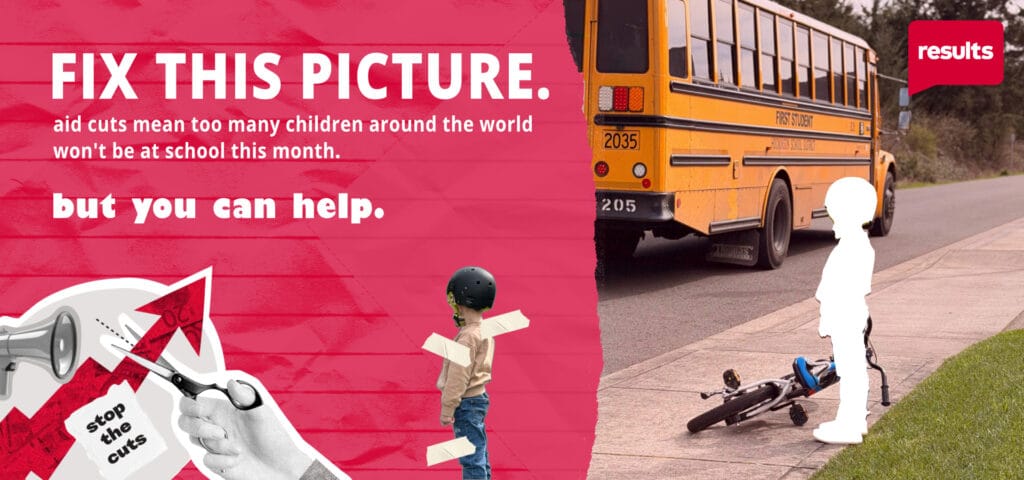
We might think that the image of a child excitedly hurrying to their first day of school is commonplace at this time of year, but for more than 273 million children around the world, this September will be the start of another school year missed. In fact, more children are out of school now than at any point since the Second World War.
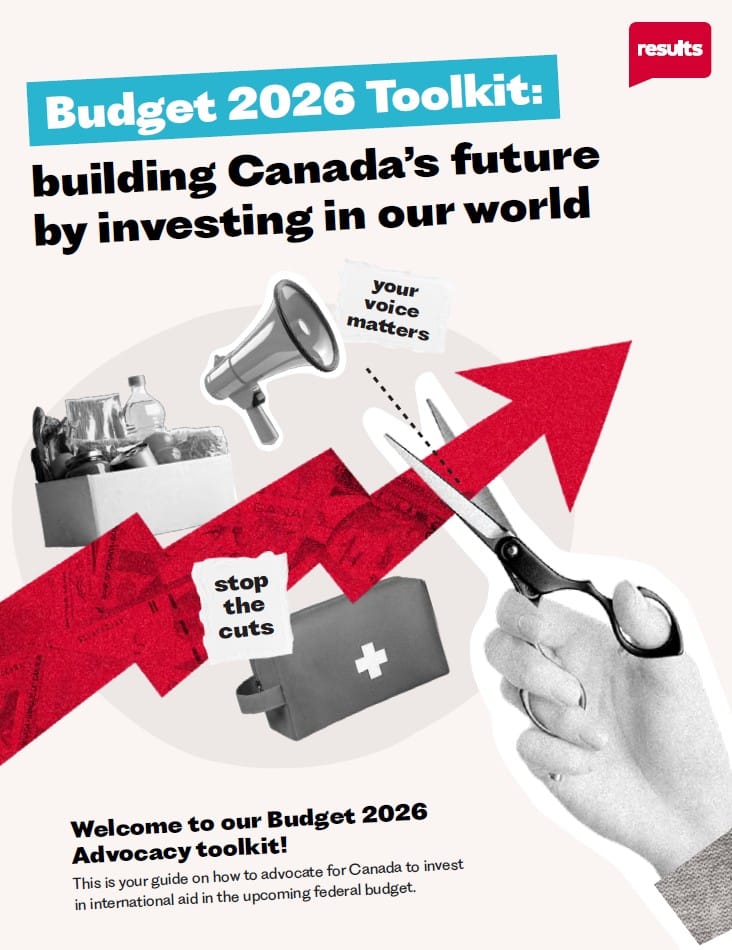
The ask: We call on Canada to stop cuts to international aid in Budget 2026 and reinvest in our world.
A growing number of overlapping crises are keeping children from the classroom. Around the world, these are making it harder for children to enter school, stay in school, and get the quality education they deserve:
Global cuts to international assistance – including last year’s devastating cuts from Canada – are putting already strained education systems under even greater pressure and contributing to declining education spending worldwide. Low- and lower-middle-income countries are projected to lose 25 percent of aid to education by 2027. Recent data shows that aid for basic education has fallen to 30 percent of total education foreign aid. Cutting international assistance is a choice – one that Canada must not make again in this budget.
Cutting programs that help children around the world learn is a shortsighted decision for Canada because strong education systems can help reduce inequality, strengthen social cohesion, and build economies. In fact, investing in education is one of the smartest ways to build economic opportunity today: with every additional year of schooling increasing individual earnings by nearly 10%. Education is also an investment in peace: one additional year of education can reduce the risk of conflict by up to 20%, while stronger education systems help build more cohesive and resilient societies.
If we want Budget 2026 to reflect us, our values, and our belief that children everywhere deserve access to quality education, we need to ensure that decision-makers in Canada know that people in this country care and want to see a better world. That is why we are calling on all our advocates and partners to raise their voices this September ahead of the budget.
With the US gutting foreign aid under President Trump in 2025, Canada must not follow suit and copy their misguided policy decisions. Especially when Canada has a legacy of global partnership, peacekeeping missions, and humanitarian assistance to build on.
To learn more about why September is so important for our budget advocacy, check out our blog advocating for aid.
If you are especially interested in how devasting cuts to education have been check out this case study on the state of education in Afghanistan since the massive global aid cuts in our budget toolkit.
Until Budget 2026 is be released in October or November, we will take action together to let our Members of Parliament and the Minister of Finance know that Canada must stop cuts to international assistance. From September 12-19th, we will be joined by hundreds of other like-minded volunteers, partners, and allies from across Canada for a week of action where we will be calling our MPs to advocate for a stop to the cuts in Budget 2026.
The ask: We call on Canada to stop cuts to international aid in Budget 2026 and reinvest in our world.
latest campaign news
Secure The Future
video
UN Messenger of Peace Malala Yousafzai speaks with Annemarie Hou, Executive Director of the United Nations Office for Partnership.
Malala called on world leaders to make schools safe for girls and protect every child's right to learn, saying that “if you are serious about creating a safe and sustainable future for children, then be serious about education.”
story
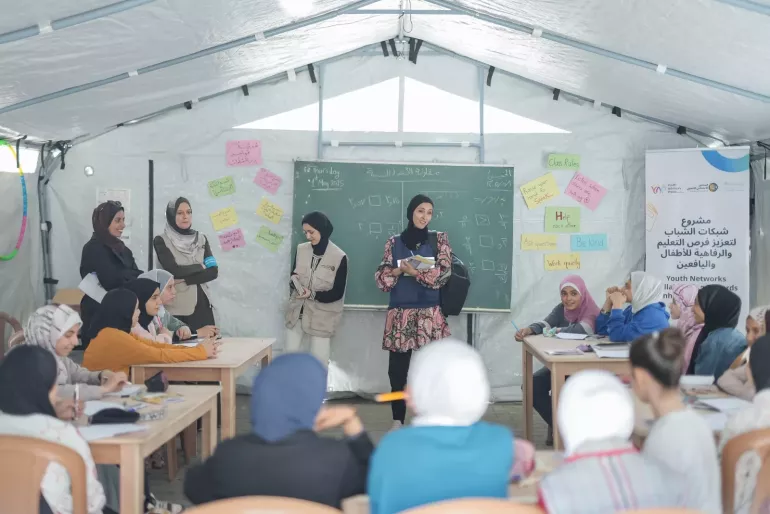
Meet Ola A. A. Alaila, an Education Officer in Gaza
“I chose to work in education because it is the cornerstone of hope and resilience for children, especially in times of crisis. Since childhood, I have dreamed of helping children unlock their potential and transform their futures through learning.
“As a Palestinian living in Gaza, even amid war, education remains the thread that weaves hope into children’s lives. I vividly remember visiting a burned-out building where a temporary learning space had been set up. Despite blackened walls and reminders of devastation, the classrooms were bursting with life. Children sat eagerly on small chairs, voices echoing in unison, faces lit with smiles – as if the war raging outside had vanished.
“Every lesson taught is a step toward rebuilding not just a child’s future, but the future of their community. This is why I work closely with teachers and partners to strengthen skills, introduce new teaching methods, and create safe spaces for learning. If we don’t support education in emergencies, we risk losing a generation’s potential, and their ability to build a peaceful future.”
#Cdnpoli
#Budget2026
@ResultsCda @MarkJCarney @RandeepSSarai @AnitaAnandMP @YasirNaqviCDN @CanadaDev
This month, we’re asking our advocates to call their Members of Parliament (MPs) to deliver a simple message: cuts to international assistance must stop in Budget 2026.
Our MPs work for us, and for our values to be reflected in Budget 2026, we need to let them know that people in this country care about building a better, healthier, and prosperous world.
Review the key messages in our Budget 2026 toolkit to prepare for your phone call. You can also tell them about the devastating costs to education outlined in our call to action and case study on the situation in Afghanistan.
From September 12-19 hundreds of advocates from organizations across Canada will be joining this effort as part of a nation-wide week of action. You can call your MP anytime, but if you want to join the concerted push this week, mark your calendars and make a plan with your networks! Let’s flood MP offices and show them that people in Canada care about aid!
To find out who your MP is and get their phone number, type your postal code here, and click Contact.
Expert tips:
Did you know that your Member of Parliament (MP) has an office dedicated to serving your community? Most MPs have a constituency office right in their riding with the purpose to serve and hear from community members like you!
Take some time this month to stop by your MP’s constituency office, drop off our Budget 2026 leave-behind, and have a chat with your MP’s staff about why cuts to international aid must stop in Budget 2026.
If your MP doesn’t have a public constituency office or no one answers the door, try giving their office a call instead!
To find out who your MP is and get their office address and phone number, type your postal code here, and click contact.
It’s important to let the government know that Canadians care about international aid so they can champion this issue as the budget is written. You can email the Minister of Finance François-Philippe Champagne (francois-philippe.champagne@parl.gc.ca) to let him know that Canadians don’t want to see international aid cut. Make sure to include your Member of Parliament (MP) in the email too! (Don’t know who your MP is?Enter your postal code in the House of Commons website to find your MP and their contact information.)
Check out our key messages and case studies from our Budget 2025 Toolkit, which give you all the information you need to tell your MP why the government should stop cutting international aid in budget 2026.
For more tips on how to email your MP, check out our other guides below:
Expert tips:
The next few months ahead of Budget 2026 are a critical time for advocates from across Canada to take action and let decision-makers know that you care about the fight to end global poverty.
To help, we’ve created a budget toolkit with the actions and resources you need to build momentum ahead of Budget 2026 over the next few months. Check it out and take action today!
Actions include:
Expert tip: smart advocates don't work alone, and they let others know when they've done impactful actions. Make sure to report your actions!