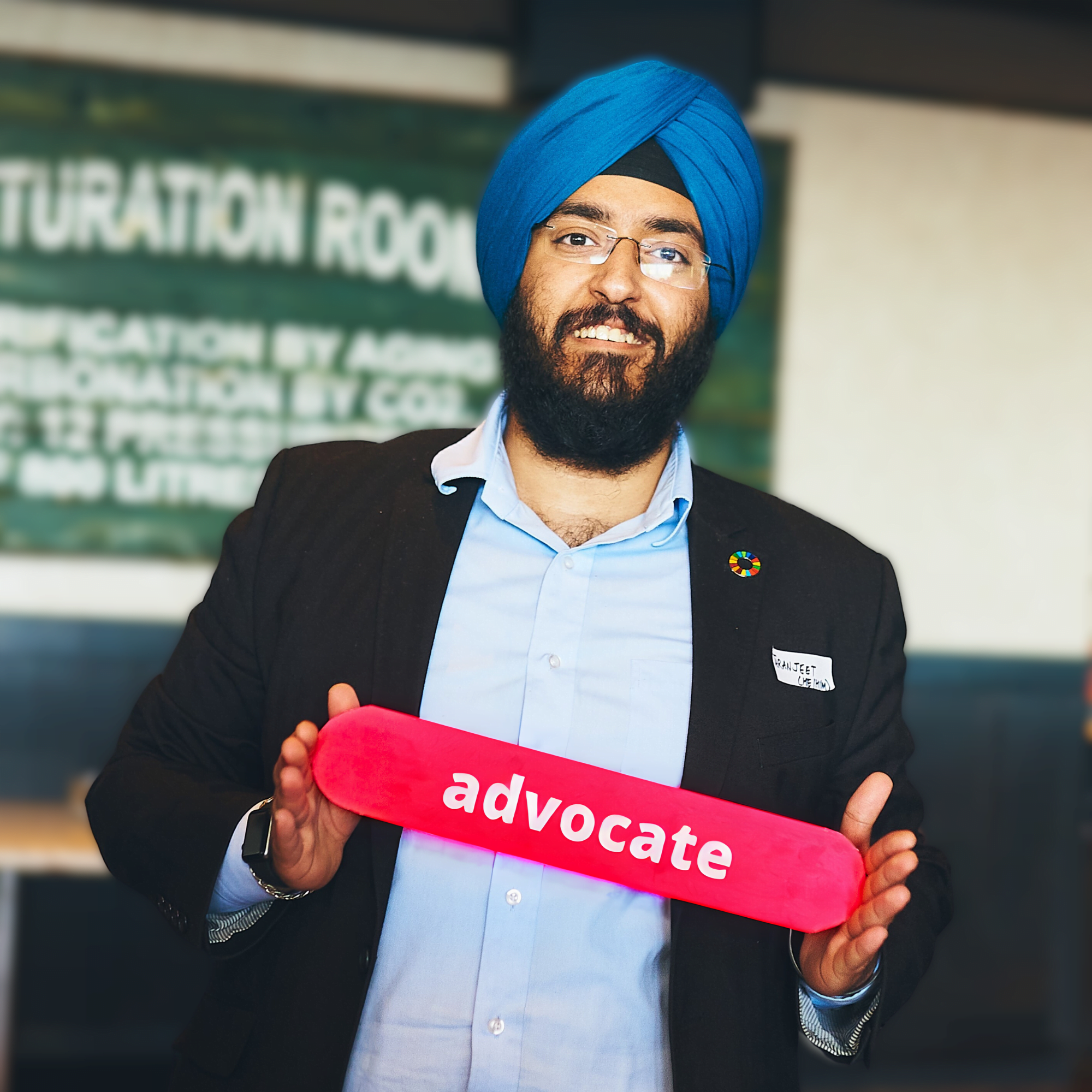
“My government will not cut foreign aid.” - Mark Carney, Prime Minister of Canada
In April, in the middle of this year’s federal election, Prime Minister Carney promised us that Canada would continue to be a global leader and that his government “will not cut foreign aid.” In the November 4th federal budget, he broke that promise and plans to cut Canadian international assistance by $2.7 billion over the next four years.
This isn’t the global leadership we were promised. This isn't what our world needs from Canada. Our world needs a Canada that prioritizes global health, nutrition, education, and development, building a better, stable world in which Canada can prosper and thrive.
The ask: We urge Canada to get back on track, beginning by making a renewed investment in the Global Fund to help #WinTheFight against AIDS, tuberculosis, and malaria.
the devastating consequences of global funding cuts
Cuts to international assistance have wide-ranging and devastating consequences.
5.7 million more people across Africa will fall into extreme poverty this year, rising to 19 million by 2030.
Countries like Liberia, Haiti, Malawi, and South Sudan, where US aid once made up 40% of health and education budgets, are seeing vital services collapse.
International assistance for nutrition is set to fall by 44% in 2025 compared to 2022, putting 2.3 million children with severe acute malnutrition at risk of losing treatment and causing an extra 163,500 child deaths each year.
Cuts by the US could mean up to 3 million preventable deaths annually, with 95 million people losing access to healthcare – including vaccines, maternal care, and treatments for malaria, TB, and HIV.
Not only is cutting international assistance the wrong thing to do, it isn’t a smart thing either.
International assistance not only saves millions of lives but also opens a world of potential and growth. Canada’s global investments build allies and trade partners around the world by strengthening communities, growing economies, and saving lives. Strong health systems abroad help prevent the next pandemic from reaching our borders, while access to nutritious food abroad creates stronger, more stable economies which in turn become trading partners for tomorrow.
By funding international assistance effectively, Canada protects lives, strengthens communities, and ensures that our investments abroad deliver lasting benefits at home.
Canada has a proud, non-partisan legacy of making an impact around the world, particularly in the lives of women and children. Across governments, Canadians have supported health, education, immunization, and nutrition. These are not partisan choices, they are Canadian values. While Canada alone cannot fill the void left by other donor countries, it can help prevent backsliding by doubling down on investments in global health and nutrition. As the current G7 president, this would send a strong message that Canada continues to uphold our commitments and is prepared to lead by example.
While many of our friends in Parliament know how international assistance helps to build a better world and a better Canada, we need to remind them that we – the people they represent – know, too.
the path forward
Budget 2025 might be past, but our advocacy is far from over. Despite disappointing cuts, Canada still has the opportunity to demonstrate global leadership by investing in the Global Fund to Fight AIDS, Tuberculosis and Malaria.
Canada’s G7 presidency this year is an opportunity to bring global leaders together again to reinvigorate the fight they started at the turn of the millennium. The world has come too far to let progress slip away. As the Global Fund holds its Eighth Replenishment, the choice before us is clear: retreat in the face of rising challenges, or double down on a proven solution that saves lives, strengthens health systems, and revitalizes communities.
Since its foundation in 2002, the Global Fund has saved over 70 million lives by decreasing the combined death rate of AIDS, TB, and malaria by 63%. Canada has been there since the beginning, continually supporting global efforts to win the fight against these three diseases.
By investing in the Global Fund this year, Canada will help save 23 million more lives, deliver a return on investment of 1:19, and avert 400 million infections or cases. Supporting the Global Fund will help us build a better world where Canada and people around the world can thrive and prosper.
Canada’s support for the Global Fund
Canada has supported the Global Fund since the partnership was established in 2002 and is the seventh largest public donor.
At the last Replenishment in 2022, Canada made a historic investment of CAD$ 1.21 billion towards the Global Fund, representing the largest contribution it had ever made towards a global health initiative.
Canada’s investment in the Seventh Replenishment contributed to a record-breaking total of US$ 15.7 billion to support programming in over 120 countries. This funding supported getting 25 million people on antiretroviral therapy for HIV, treating 7.1 million people for TB, and distributing 227 million mosquito nets to prevent malaria in 2023 alone!
Canada has a seat on the Global Fund board, representing Australia and Switzerland as well.
While the Global Fund and other international efforts have helped save lives, the fight is far from over. Canada’s role in the world is at a crossroads, and we can’t take our support for the Global Fund for granted. We need to make sure that parliamentarians and the Prime Minister know that, despite a disappointing budget, passionate advocates like us are still here, working tirelessly to build a healthier, more equitable world for everyone.
The ask: We urge Canada to get back on track, beginning by making a renewed investment in the Global Fund to help #WinTheFight against AIDS, tuberculosis, and malaria.
latest campaign news
#BudgetForLeadership:
We are deeply disappointed by the 2025 Federal Budget which cut $2.7 billion over for years from the International Assistance Envelope (IAE) - the primary source of Canada’s foreign aid funding. This is despite Prime Minister Carney’s clear campaign commitment that “my government will not cut foreign aid.” Today’s budget not only breaks that promise but also risks undoing decades of Canadian leadership in global health, nutrition, education, and development, which are necessary for a stable and prosperous world and Canada. We need to let the parliamentarians who represent us in Ottawa know that this isn’t the leadership we were promised, and that Canada must reverse these cut – starting with a renewed commitment to the Global Fund. Read our press release.
#FeedOurFuture
We are hosting A Hunger for Change: A Canadian Call to End Malnutrition on November 15 from 11:30am-2pm PST in Surrey, BC. This engaging event will examine on the role of Canada—and people like you—in ending the malnutrition crisis currently threatening the lives of millions of children around the world. We’re bringing together experts, volunteers, and the public to explore what’s urgently needed to end this crisis. Learn, connect, and take action to help ensure every child has the nutrition they need to survive and thrive, no matter where they were born. Learn more and register today!
For three years now, Dmytro Korobenko has worked as a driver and coordinates Alliance for Public Health’s mobile clinic teams, supported by the Global Fund.
“We choose villages that have no hospitals, where there are no doctors,” says Dmytro.
Dmytro works with physician Dr. Yulia Tatianchenko, who provides lifesaving medical care on the mobile clinic team.
“The further you go, the more people you see who need our services. If we don’t go there, what will happen?” she says.
Even before the ongoing war, Ukraine had a high burden of HIV and TB. As in all wars, violence, destruction and displacement fuel the spread of disease and decimate local health systems.
Despite monumental challenges, these mobile teams continue to deliver health care to those most in need, and they remain Ukraine’s only line of defense against the spread of deadly disease.
Why support the Global Fund? Because it works. Because together, we’ve made unstoppable progress against the deadliest infectious diseases. Because we strengthen health systems and save lives on a massive scale. Because where you live shouldn’t determine whether you live. 70 million lives saved. Millions more to go. Together, we must Stop at Nothing to end AIDS, TB and malaria.
Budget 2025 wasn’t what we were promised. Instead of keeping his word and preserving international assistance, Prime Minister Carney cut international assistance, taking a step back from our world when we’re needed most.
Email your Member of Parliament to let them know that you’re disappointed that Budget 2025 isn’t the global leadership we were promised in Election 2025.
Make it clear why you personally care about Canada’s role in the world and mention how a strong international assistance envelope means Canada can continue supporting life-saving programs like the Global Fund to Fight AIDS, Tuberculosis, and Malaria. Make sure to CC’ the Minister of Foreign Affairs (Anita.Anand@parl.gc.ca) and the Secretary of State for International Development (randeep.sarai@parl.gc.ca) in your email.
To find out who your Member of Parliament is, type your postal code here and then find their email address by clicking the contact tab.
Expert tip: Use the EPIC model of effective communication to get your message across clearly.
write a Letter to the Editor (LTE)
With a disappointing budget tabled on November 5, draft a letter to the editor (LTE) which highlights this missed opportunity to build a better world, and centre the Global Fund to Fight AIDS, Tuberculosis and Malaria as an opportunity for Canada to get back on track. Using the information in our call-to-action, pitch a short LTE to a news outlet to get the word out.
Canada spends just 34 cents for every $100 on international assistance, a small investment with life-changing impact. Whether you’ve seen the effects of global poverty firsthand, care deeply about fighting diseases like TB, or believe every child deserves access to food and care, your story and your opinion matter. Remind readers that Prime Minister Mark Carney broke his campaign promise to not cut international assistance, and that we are hoping he can correct this mistake by making an ambitious pledge for the Global Fund to Fight AIDS, Tuberculosis and Malaria later this month.
Use your letter to share why you personally care about Canada showing up for the world and why you want to see our leaders keep our international assistance funding. Even a short message can spark awareness and inspire others to take action.
Be sure to send your LTE to your local community papers for the best chance of being published! Refer to past volunteer LTEs but don’t fall into the trap of copying other people’s styles. Don’t forget to let us know you took action!
follow these step-by-step instructions to write an LTE
Volunteers on average spend 1-2 hours researching and planning, 30 minutes writing their draft, and 15 minutes submitting it to newspapers.
Research the current issue by reading the news or external reliable sources (e.g., the World Health Organization).
Draft your LTE. It doesn’t have to be perfect, and you don’t have to be an expert to have an opinion.
Create an outline of your letter using the EPIC format.
Keep it short – 150-200 words. Being clear and concise will increase your chances of getting published.
Focus on your perspective and speak from the heart while supporting your opinion with evidence from our call-to-action and/or your research.
Remember to state the problem early on and include a solution to the issue which is usually the “ask” in the call-to-action.
Write a catchy title that will draw the reader in.
Review your draft to make sure you are using respectful and inclusive language – see our anti-oppression best practices.
Decide if you are sending your LTE to one or many newspapers. If you’re emailing multiple newspapers, put their addresses in the BCC field. Use our database of editors’ emails for options.
Press ‘send’ – congratulations! Be sure to let us know you’ve submitted an LTE through our reporting form or tell your Group Leader. If you are not part of a group, contact us at action@resultscanada.ca. If you are not a volunteer yet, join us!
Do an internet search of your name and a key sentence from your LTE for a few weeks after you submit if the newspaper editor didn’t notify you that they picked up your LTE.
If you got published, complete the “I got published in the media” form.
Respond to a recently published article as a hook for your LTE.
Collaborate with other volunteers. Nothing is stopping you from submitting a co-written LTE!
Speak another language? Send your LTE to community newspapers published in that language.
Consider writing an op-ed if you have lots of research material and 200 words isn’t enough!
use your voice on social media
Help voice your disappointment in the budget and amplify the call for Canada to invest in the Global Fund by liking and sharing Results Canada’s posts.