“Canada’s approach to international development is rooted in gender equality, dignity and sustainability so that development progress creates opportunities for all.” - Randeep Sarai, Secretary of State for International Development
In a maternity ward in the Central African Republic, Hermina cradles her newborn daughter after walking alone for four hours to reach safe and assisted care. She is happy but her joy is overshadowed by uncertainty “I don’t know what will become of her,” she says. “She’s a girl.”
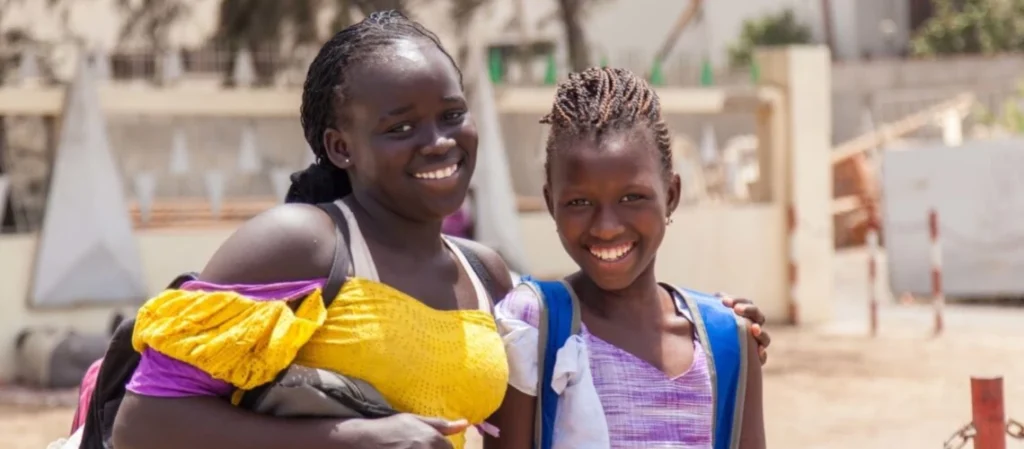
Her words reflect a reality faced by millions of women and girls worldwide: gender can determine whether you survive childbirth, whether your child lives past their fifth birthday, and whether you can shape your own future. Social power structures, harmful gender norms, early marriage, limited education, and exposure to gender-based violence restrict women’s access to care.
Gender inequality remains one of the most powerful and overlooked drivers of poor health outcomes worldwide. Women spend an average of nine years of their lives in ill health, a quarter more than men, often during their most productive years. The consequences ripple outward to children and communities.
And discrimination begins early. In parts of India, fewer newborn girls are admitted to special care units than boys, and families spend significantly less on their care. In multiple countries supported by the Global Financing Facility (GFF), including Ghana, Tanzania, and Uganda, women living in communities where gender-based violence is normalized are less likely to access skilled birth attendants or complete health care visits after birth. When women’s status is diminished, their access to lifesaving care declines, and so does their children’s chance of survival.
This is why investing in the GFF is an investment in gender equality.
The ask: As progress on women’s and children’s survival comes under increasing pressure and inequalities widen, we urge Canada to continue its longstanding support for the Global Financing Facility by making an early pledge of $340 million over the next five years at the World Bank-International Monetary Fund Spring Meetings in April.
The GFF addresses gender inequality by helping countries to:
mobilize and catalyze funding to strengthen their health systems, ensuring that women and girls have access to the health and nutrition services that are essential to their survival
integrate gender equality directly into health reforms
remove legal barriers for pregnant girls to stay in school
strengthen civil registration systems so newborn girls have legal identity
amplify women’s leadership in health decision-making
how the GFF works
Country-led and efficient: The GFF connects funding from donors with national health plans, focusing resources on the most effective services for women and children.
Small grants, big leverage: Small GFF grants attract much larger World Bank financing, multiplying resources for health.
Cost-effective investment: For under $100 per person per year, strong primary health care can prevent up to 90% of child deaths. GFF countries are reducing mortality faster than the global average.
Stronger economies and trade partners: The GFF helps children stay healthy and stay in school. Healthier, better-educated populations are more productive over their lifetimes, expanding future workforces, consumer markets, and trade partners.
Transition from assistance to mutually beneficial partnerships: As countries grow and reduce mortality, many will transition out of GFF financing and re-engage as economic and knowledge partners.
Greater global stability: By supporting reliable, affordable health systems and job creation, the GFF help countries manage demographic and economic transitions, which reduce inequality, social unrest, and forced migration.
Closing the health gap for women is not only a moral imperative; it is smart economics. Healthier women raise healthier children. Healthier children stay in school, join the workforce, and contribute to stable, growing economies. Advancing women’s health and rights could add at least $1 trillion to the global economy annually by 2040.
As Minister Sarai made clear recently during International Development Week in the quote above, Canada has long positioned gender equality at the centre of its approach to international assistance, building on the G8 Muskoka Initiative that helped launch the GFF.
But past commitments are not enough in the current climate. This year’s global aid cuts are falling hardest on countries where it is already most difficult to be a woman or a girl – and women and girls are often the first to feel the consequences when health systems weaken.
The consequences of these cuts are immediate: closures of maternal health centres, reduced access to sexual and reproductive health services, rising barriers to emergency care, and increased vulnerability to violence and exploitation as girls lose access to education. Women-led organizations are also losing funding, shrinking civic space and undermining local gender equality efforts.
In this context, failing to sustain financing through mechanisms like the GFF risks reversing progress in maternal and child survival at precisely the moment when women and girls can least afford it.
how the GFF contributes to gender equality
With the GFF’s support:
Niger and Cameroon have implemented legal reforms to allow pregnant girls to remain in school and access sexual and reproductive health services.
In Mali, youth and religious leaders are successfully advocating for expanded access to sexual and reproductive health services.
In Senegal, civil society organizations developed a digital tool enabling youth, health workers, and communities to monitor and strengthen service delivery.
Countries are strengthening civil registration and vital statistics (CRVS) systems to prevent child marriage and ensure girls can access health and education benefits; in Kenya, CRVS reform led to an 82% increase in birth registrations in 2021.
The GFF’s country leadership initiatives are amplifying women’s voices in health-sector decision-making in Kenya, Malawi, and Ethiopia.
As we mark International Women’s Day on March 8, we are reminded why leadership and early action matter. A renewed Canadian pledge to the GFF would help countries expand access to modern contraceptives, ensure millions of women receive early care during pregnancy and access to safe delivery, support early breastfeeding, and vaccinate hundreds of millions of children. It would protect progress and accelerate it.
Beyond financing health services, Canada’s renewed support for the GFF will help confront the structural inequality that determines whether a newborn girl is given the same chance at life as a boy. With early, bold action, mothers like Hermina everywhere can feel relief, hope, and the joy of knowing their daughters have a fair chance to survive, grow, and thrive.
The ask: As progress on women’s and children’s survival comes under increasing pressure and inequalities widen, we urge Canada to continue its longstanding support for the Global Financing Facility by making an early pledge of $340 million over the next five years at the World Bank-International Monetary Fund Spring Meetings in April.
latest campaign news
TogetherWeLead
Last year, launched the #TogetherWeLead campaign focused on Canada’s leading role in bringing the world together to make bold commitments and ensure everyone, everywhere, has the opportunity to live, thrive, and reach their full potential. Despite a challenging political context, including a federal election, and rising global instability, our advocacy delivered real results. Canada invested in Gavi, the Vaccine Alliance, Nutrition International, the Child Nutrition Fund, and The Global Fund to Fight AIDS, Tuberculosis and Malaria. While some pledges fell short of our hopes, every dollar counts toward saving and improving millions of lives. This year, we will continue to push Canada to step up, lead boldly, and defend the progress.
story
Despite being largely preventable through HPV vaccination and regular screening, cervical cancer is the fourth most common cancer in women around the world. With support from the GFF, youth advocates are spreading awareness among adolescent girls, and countries are strengthening access to screening, vaccination, and treatment. Cervical cancer is a cancer that we have the power to prevent and eliminate with smart investments in programs like this, vaccines, and policies that support gender equality.
In the last 20 years, the global maternal mortality rate has dropped by 33%, but with political will and high-impact investments, Senegal has achieved a 60% reduction over the same period. Find out more about the GFF’s key role in this video.
March 4 - HPV Awareness Day March 8 - International Women's Day March 9-20 - Commission on the Status of Women (CSW70) March 24 - World TB Day Check out our full key dates calendar
keywords
Child survival Maternal survival cuts Global Financing Facility #cdnpoli
Last month, we asked you to reach out to your Member of Parliament (MP) by e-mail to introduce the Global Financing Facility and explain why Canada should invest in this mechanism. Whether you were able to or not, it's time to...
...take action now
This month, follow up (or reach out for the first time!) and request a meeting – in person or virtually – to tell your MP why an investment in the GFF is strategic to increase the impact of each Canadian dollar, reinforce health systems and economies, and enable countries to transition out of international assistance. Time is of the essence! Try to schedule your meeting by the week of April 1.
Why? Well, if Canada shows up early with a strong pledge to the GFF at the 2026 World Bank-International Monetary Fund Spring Meetings this April, we can set the stage for other countries to do the same. That’s Canadian leadership in action, and it depends on advocates like you urging your MP to support the GFF.
In your email requesting a meeting, highlight how the GFF’s approach is led by partner countries, to help them eliminate preventable child and maternal deaths by bringing services closer to the most marginalized communities, and to dismantle barriers to gender equality. All the information you need is in our call to action.
next steps
Once you have a meeting secured, let us know by emailing action@resultscanada.ca so we can help make sure you have everything you need to succeed.
In your meeting, you will ask your MP to send a letter to the Secretary of State (International Development) Randeep Sarai (copying Minister of Foreign Affairs, Anita Anand), urging that the Government of Canada continue its longstanding leadership with a $340 million pledge to the GFF over five years at the Spring Meetings. Be sure to give the MP this document(French version here) by bringing a printed version or sending it electronically so they can learn more.
Your voice can help ensure Canada leads at a critical moment, when progress is fragile, but impact is proven.
Note for volunteers: With over 300 volunteers across Canada, several of you have the same MP. To avoid any one Member of Parliament receiving a barrage of emails from Results volunteers, coordinate with your group leader to organize your outreach and ensure that there’s no overlap.
Expert tip: Use the EPIC model of effective communication to get your message across clearly.
write a Letter to the Editor (LTE)
In March, there are strong media hooks to elevate the importance of the Global Financing Facility (GFF).
On March 4, HPV Awareness Day offers an opportunity to highlight how the GFF strengthens country health systems to prevent and treat cervical cancer. You can use this example of how the GFF is working on this with the World Bank.
March 8 is International Women’s Day, and between March 9–20 stakeholders from all around the world will meet for the Commission on the Status of Women (CSW70) in New York City. You can underscore how the GFF supports countries in tackling the intersection of gender inequality and global health: by identifying barriers and strengthening systems to ensure women and girls can access the care, rights, and leadership opportunities they deserve.
Your voice matters. Letters to the editor (LTEs) are one of the clearest ways to show Members of Parliament that their constituents are paying attention.
Be sure to send your LTE to your local community papers for the best chance of being published! Refer to past volunteer LTEs but don’t fall into the trap of copying other people’s styles. Don’t forget to let us know you took action!
follow these step-by-step instructions to write an LTE
Volunteers on average spend 1-2 hours researching and planning, 30 minutes writing their draft, and 15 minutes submitting it to newspapers.
Research the current issue by reading the news or external reliable sources (e.g., the World Health Organization).
Draft your LTE. It doesn’t have to be perfect, and you don’t have to be an expert to have an opinion.
Create an outline of your letter using the EPIC format.
Keep it short – 150-200 words. Being clear and concise will increase your chances of getting published.
Focus on your perspective and speak from the heart while supporting your opinion with evidence from our call-to-action and/or your research.
Remember to state the problem early on and include a solution to the issue which is usually the “ask” in the call-to-action.
Write a catchy title that will draw the reader in.
Review your draft to make sure you are using respectful and inclusive language – see our anti-oppression best practices.
Decide if you are sending your LTE to one or many newspapers. If you’re emailing multiple newspapers, put their addresses in the BCC field. Use our database of editors’ emails for options.
Press ‘send’ – congratulations! Be sure to let us know you’ve submitted an LTE through our reporting form or tell your Group Leader. If you are not part of a group, contact us at action@resultscanada.ca. If you are not a volunteer yet, join us!
Do an internet search of your name and a key sentence from your LTE for a few weeks after you submit if the newspaper editor didn’t notify you that they picked up your LTE.
If you got published, complete the “I got published in the media” form.
Respond to a recently published article as a hook for your LTE.
Collaborate with other volunteers. Nothing is stopping you from submitting a co-written LTE!
Speak another language? Send your LTE to community newspapers published in that language.
Consider writing an op-ed if you have lots of research material and 200 words isn’t enough!
special TB action: follow up & show up
With investment in stronger, more resilient health systems, and primary health care, we can support the fight against all diseases, including the deadliest ones, such as tuberculosis.
Thanks to your incredible support, Canada set a world record last year with 56 monuments lit up – and we want to surpass that milestone in 2026! With less than a month remaining, we need your help to make the fight against TB impossible to ignore.
Step 1: Follow up on your landmark requests
Thank you so much to our volunteers and Fellows for all your dedication in submitting requests to light up Canadian landmarks in red for World TB Day! It’s now time to follow up on them to make sure everything is on track. Feel free to refer back to our guide whenever needed.
If the landmark needs any additional information after lighting approval, including a suggested social media post, you can share this one-pager.
Please make sure to indicate when a follow-up has been done and confirm the responses once you hear back from the sites. Every update helps us stay organized, coordinate the campaign effectively, and gives us the best chance to surpass last year’s record!
Step 2: Show up and meet up on World TB Day
On March 24, find a confirmed monument near you on our list and visit it in person with your volunteer group and your friends. Take a photo or selfie in front of it! If you can’t get to a monument, print the campaign poster and take a photo with it instead.
Our volunteer advocates are already arranging to meet up at monuments in these cities (listed below). Want to attend? Let us know by emailing action@resultscanada.ca and we'll be happy to give you more information!
Ottawa sign in the Byward Market on York St at 6:30 PM ET
Winnipeg sign at the Forks at 8:00 PM CDT
Calgary Tower or Telus Spark Science Centreat 8:30pm MT
Victoria Legislature building – contact action@resultscanada.ca for information on how to to join
Toronto sign at Nathan Phillips Square at 7:15pmET
Waterloo – Time and location to be announced
Montreal at Place Vauquelin (275, rue Notre-Dame Est) at 7pm ET
Share your photo on social media with the message that #YesWeCanEndTB with strong political will and sustained investments, and tag:
Results Canada
Your Member of Parliament
The MP representing the monument’s location
Together, your follow-ups and your public photos turn commitments into visibility and awareness into action, making it the fight against TB impossible to ignore!