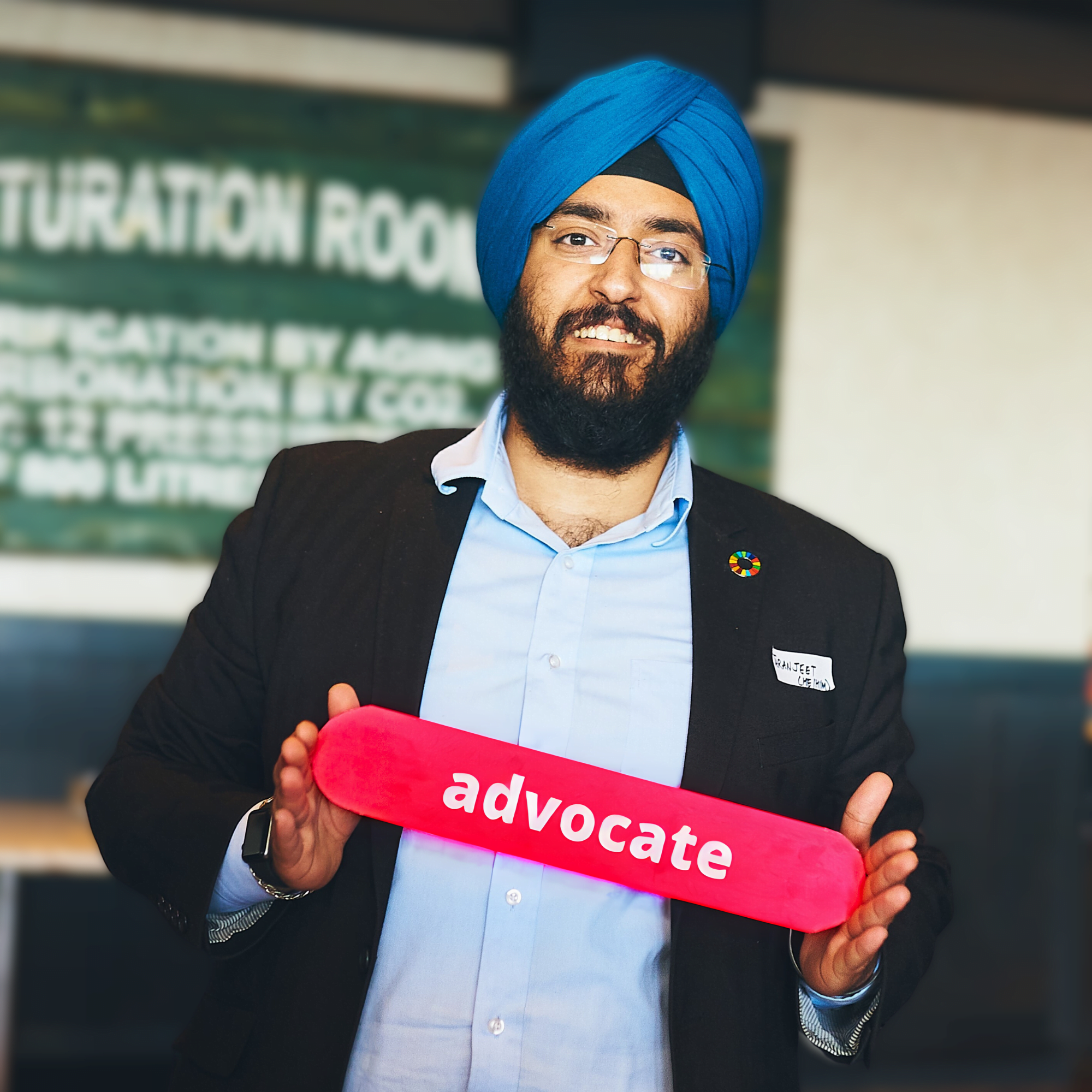
“Often, people think budget cuts save money. But what really saves money – and lives – is spending with vision, discipline, and purpose…the path forward is one we walk together: communities, governments, and global partners, side by side. That's how real change is built, and how it lasts.” - Muhammad Inuwa Yahaya, Governor of Gombe State, Nigeria
For the first time this century, the number of children dying before their fifth birthday is projected to rise.
It is estimated that, in 2025, the number of children under five who died may be as high as 4.8 million, which would be around 200,000 more than the previous year.
These children are not dying because solutions don’t exist. We are the generation with access to the most advanced science and innovation in human history, yet we still fail to act to ensure life-saving tools reach everyone, everywhere. At the same time, 272 million children are missing out on school, despite clear evidence that learning is essential to their wellbeing, social-emotional skills, future economic opportunities and the stability of their communities.
Decades of hard-won gains in health and education are now at risk of unraveling as funding and political commitments fall short.
We can stop this reversal. Even in tight budgets, proven solutions and next-generation innovations can save millions of lives while also invigorating the global economy and improving our collective security.
In 2026, as Results Canada marks 40 years of raising our voices for a world without extreme poverty, we are reminded that progress does not happen by accident. It happens when people take action and governments choose to invest with vision and purpose. Now is the time to call on Canada to defend decades of progress towards ending extreme poverty.
The ask: We call on Canada to defend the progress towards ending extreme poverty by strengthening its international assistance to close gaps in healthcare and education for women and children, fight malnutrition, and boost research in vaccines, diagnostics, and treatments to ensure everyone, everywhere has the chance to thrive.
40 years of progress in global health and education
Extreme poverty has been cut by roughly half in low- and middle-income countries since 2000.
Global child deaths fell from 10 million to under 5 million a year between 2000 and 2020, driven by vaccines and better nutrition.
Polio has been eradicated in most of the world, with the wild poliovirus still present in only 2 countries: Afghanistan and Pakistan.
Enrolment in higher education has more than doubled globally in the last two decades.
Advances in science helped deliver multiple COVID-19 vaccines in less than a year, cutting vaccine development timelines from decades. That same innovation is now bringing us closer to the first new tuberculosis vaccine in a century.
The progress we’ve fought for and seen is remarkable. But it's also fragile.
The Group of Seven (G7) countries, which together account for around three-quarters of all official development assistance, are set to slash their aid spending by 28% for 2026 compared to 2024 levels. If global health funding falls by 20%, an estimated 12 million more children could die by 2045 from preventable causes. At 30% cuts, that toll rises to 16 million lives lost. At the same time, global education funding is projected to fall by about 24%, which could leave around 6 million more children – 30% of whom live in crisis-affected countries – out of school by the end of 2026.
defend past gains
That’s why in 2026, Results Canada will campaign to defend and build on past gains by strengthening Canada’s international assistance and investing in the future, focusing on two critical fronts:
Reinforce health and education systems: We will push for investments that build resilient health and education systems able to withstand conflict and climate shocks, while expanding access to primary health care, vaccines, nutrition, and learning for all students. By ambitiously backing proven initiatives – such as the Global Financing Facility for Women, Children and Adolescents, the Child Nutrition Fund, the Global Partnership for Education, and the Global Polio Eradication Initiative – Canada can close gaps for women and children, strengthen country-led systems, and save more lives per dollar invested.
Advance science, research, and innovation: We will call for bold investments in the science that protects all of us. Canada must back platforms like the Coalition for Epidemic Preparedness Innovations, Unitaid, and tuberculosis research and development to ensure life-saving vaccines, diagnostics, and treatments reach the communities that need them most.
Recent cuts to Canada’s international assistance, despite Prime Minister Mark Carney’s campaign commitment not to do so, undermine investments that strengthen Canada’s own safety, security, and prosperity.
supporting the world is supporting Canada
While we know international development should be rooted in solidarity, compassion, and humanity, decision-makers often ask how investments benefit Canada and Canadians. Here’s how:
Economic resilience: Investments in health, nutrition, and education build stable societies that become reliable trading partners. With the U.S. no longer the primary foundation of Canada’s economic security, trade diversification is essential. Asia, Latin America, and Africa – particularly Sub-Saharan Africa, home to one-quarter of the global population by 2050 – are among the fastest-growing regions. The countries Canada supports today will shape tomorrow’s global economy.
Return on investment:
Every $1 in nutrition returns $16-28 in lifetime economic benefits.
Pandemic prevention and preparedness (early detection, rapid response, and vaccine development) yields $14 per $1.
Every dollar spent on immunization gave countries a return of $54.
Globally, there is a 9% increase in hourly earnings for every extra year of schooling, which drives long term economic growth, innovation, and communities.
Global and National Security: By supporting early detection and response to infectious disease threats, international assistance helps prevent local health crises from escalating across borders, protecting people in Canada and contributing to global stability. Similarly, investments in education are proven to reduce violence and political instability: when children have access to quality learning, communities are more peaceful, while lower school enrolment is linked to higher levels of conflict and insecurity.
Global credibility: Canada’s leadership in gender equality, multilateralism, and inclusive governance – reflected in initiatives such as the Feminist International Assistance Policy, G7 investments in education (Charlevoix), and women’s health (Muskoka) – strengthens its role in global negotiations, peacebuilding, and health initiatives, and reinforces Canada’s credibility as a principled global leader.
looking ahead
This is a defining moment for Canadian leadership. Global health is global security, and the world’s women and children are on the frontlines.
By defending proven, cost-effective solutions and investing in research and innovations, Canada can save lives, strengthen global health security, and build lasting partnerships. This is our moment to defend the progress, not by chance, but by choice.
The ask: We call on Canada to defend the progress towards ending extreme poverty by strengthening its international assistance to close gaps in healthcare and education for women and children, fight malnutrition, and boost research in vaccines, diagnostics, and treatments to ensure everyone, everywhere has the chance to thrive.
latest campaign news
TogetherWeLead
Last year, launched the #TogetherWeLead campaign focused on Canada’s leading role in bringing the world together to make bold commitments and ensure everyone, everywhere, has the opportunity to live, thrive, and reach their full potential. Despite a challenging political context, including a federal election, and rising global instability, our advocacy delivered real results. Canada invested in Gavi, the Vaccine Alliance, Nutrition International, the Child Nutrition Fund, and The Global Fund to Fight AIDS, Tuberculosis and Malaria. While some pledges fell short of our hopes, every dollar counts toward saving and improving millions of lives. This year, we will continue to push Canada to step up, lead boldly, and defend the progress.
Josephine, a community health worker in Kenya, is a “mother mentor.” She guided young women, many of whom had experienced violence and motherhood before adulthood, through pregnancy, being a new mother, and the basics of keeping their babies healthy.
When funding was cut, she lost her official role, but the need did not disappear. She returned to her duties unofficially and unpaid, continuing to screen for gender-based violence, provide health education, and care for children.
Despite gaps in support, she keeps showing up, believing that when women are supported, they transform not only their own lives but their children’s and their communities’, and every day she chooses that future.
Cervical Cancer Awareness Month January 8: Results Canada's Action Kick-Off January 19-23: World Economic Forum January 24: International Day of Education January 26: House of Commons returns January 30: Neglected Tropical Diseases Day Check out our full key dates calendar
keywords
Cuts Official Development Assistance (ODA) International Assistance
Engaging with your Member of Parliament (MP) is key to effective advocacy and starts with staying informed. MPs regularly share updates on their work in Ottawa and in your community through newsletters, highlighting local events, federal programs, and opportunities to engage.
To find out who your Member of Parliament is, type your postal code on the House of Commons website and then find their website by clicking the contact information button. You can usually sign up for their newsletters through their website. If you cannot find their website in the tab, search their name to find it. These updates help you understand their priorities and spot the right moments to speak up. This simple action can increase the impact of your advocacy. And don’t forget to follow your MP on social media as well!
Expert tip: Use the EPIC model of effective communication to get your message across clearly.
write a Letter to the Editor (LTE)
Your voice matters. Letters to the editor (LTEs) are one of the clearest ways to show Members of Parliament that their constituents are paying attention. Write an LTE this month urging Canada to defend decades of progress in 2026 by emphasizing the importance of international assistance to ensuring everyone, everywhere has the chance to thrive
Choose one or more of these proven ways that international assistance makes our world better:
closing gaps in healthcare for women and children,
fighting malnutrition,
boosting research in vaccines, diagnostics, and therapeutics,
Strengthen access to quality education so all children can learn
Use key moments as hooks like:
the International Day of Education on January 24
the World Economic Forum from January 19-23
International Development Week in the first week of February
Focus your LTE on the importance of international assistance in Canada’s broader foreign policy, including links to trade, security, and prosperity.
A constructive, honest LTE communicates disappointment, encourages policymakers to raise ambition, and helps other readers understand why strong pledges matter for saving lives and strengthening global security. Public pressure like this is essential to push Canada to support women and children, invest in epidemic preparedness, and respond decisively to the global malnutrition crisis.
Be sure to send your LTE to your local community papers for the best chance of being published! Refer to past volunteer LTEs but don’t fall into the trap of copying other people’s styles. Don’t forget to let us know you took action!
follow these step-by-step instructions to write an LTE
Volunteers on average spend 1-2 hours researching and planning, 30 minutes writing their draft, and 15 minutes submitting it to newspapers.
Research the current issue by reading the news or external reliable sources (e.g., the World Health Organization).
Draft your LTE. It doesn’t have to be perfect, and you don’t have to be an expert to have an opinion.
Create an outline of your letter using the EPIC format.
Keep it short – 150-200 words. Being clear and concise will increase your chances of getting published.
Focus on your perspective and speak from the heart while supporting your opinion with evidence from our call-to-action and/or your research.
Remember to state the problem early on and include a solution to the issue which is usually the “ask” in the call-to-action.
Write a catchy title that will draw the reader in.
Review your draft to make sure you are using respectful and inclusive language – see our anti-oppression best practices.
Decide if you are sending your LTE to one or many newspapers. If you’re emailing multiple newspapers, put their addresses in the BCC field. Use our database of editors’ emails for options.
Press ‘send’ – congratulations! Be sure to let us know you’ve submitted an LTE through our reporting form or tell your Group Leader. If you are not part of a group, contact us at action@resultscanada.ca. If you are not a volunteer yet, join us!
Do an internet search of your name and a key sentence from your LTE for a few weeks after you submit if the newspaper editor didn’t notify you that they picked up your LTE.
If you got published, complete the “I got published in the media” form.
Respond to a recently published article as a hook for your LTE.
Collaborate with other volunteers. Nothing is stopping you from submitting a co-written LTE!
Speak another language? Send your LTE to community newspapers published in that language.
Consider writing an op-ed if you have lots of research material and 200 words isn’t enough!
use your voice on social media
Share a post on social media calling on Canada defend decades of progress in 2026 by strengthening international assistance, closing gaps in healthcare for women and children, fighting malnutrition, and investing in vaccines, diagnostics, and therapeutics. Highlight why taking action matters and how collective advocacy saves lives and strengthens global health and security.
Social media amplifies our message beyond meetings and letters. When you share your voice, your friends and followers learn how simple actions can create real change for women, children, and communities worldwide. This helps grow our movement, build awareness, and inspire others to act.
Remember to tag Results Canada so we can celebrate and amplify your post!