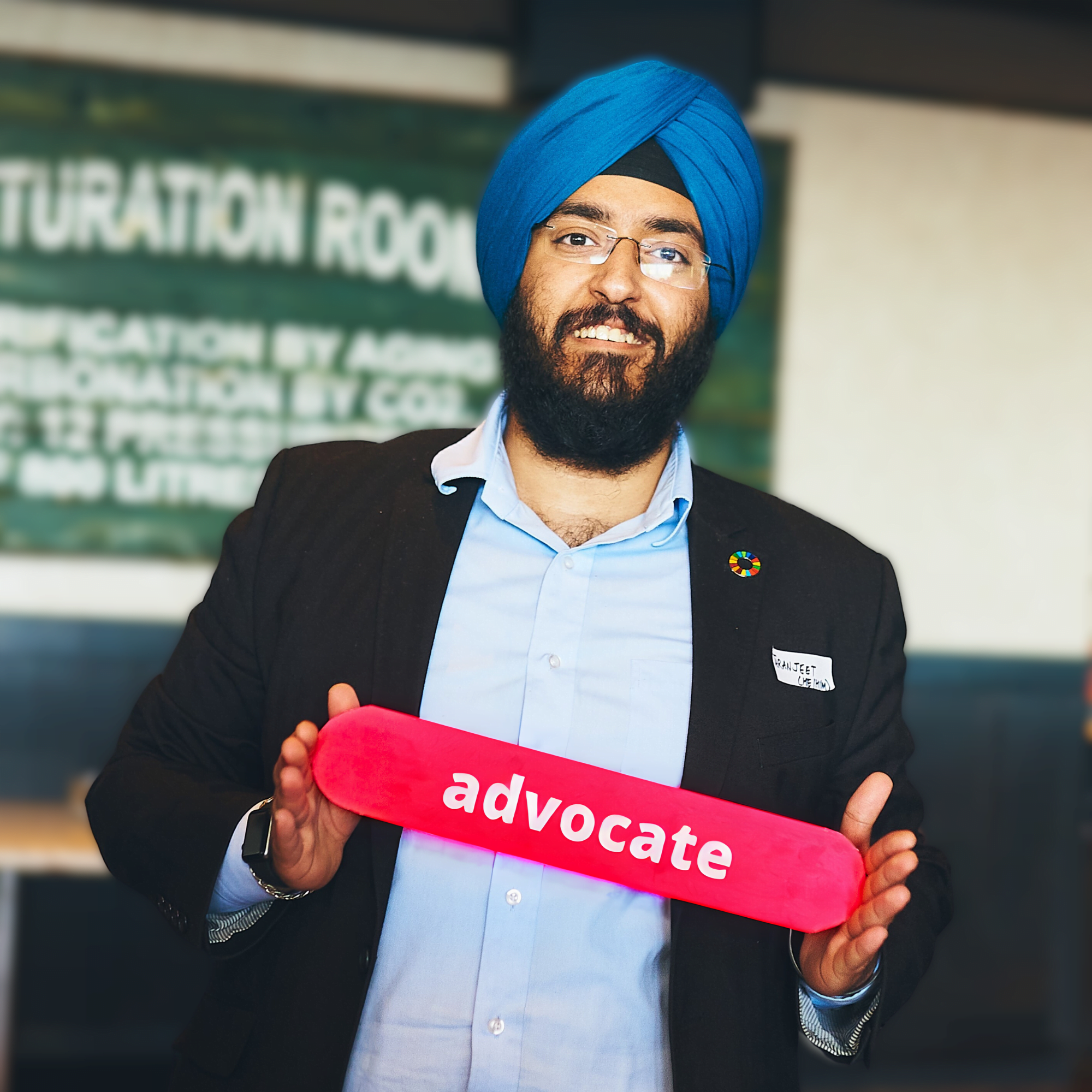





Every September, world leaders gather in New York for the UN General Assembly's High-Level Week to address the world’s most pressing challenges, and every year it's a test of whether countries will turn speeches into action.
Results Canada went to New York to hold Canada accountable, making sure its commitments align with the issues our volunteers have been advocating for. We followed key announcements, engaged with decision-makers and partners, and connected Canada’s commitments to the advocacy happening back home.
This year, Canada came to New York with more than words, announcing more than $398 million in new international assistance for education, health and humanitarian action, and an additional $100 million in humanitarian funding specifically for Palestine. We see these announcements as proof that our advocacy can move the needle.
10,000 kilometres away from New York City, the Democratic Republic of the Congo is facing its largest and deadliest Ebola outbreak, with thousands of confirmed cases and deaths and no licensed vaccine for the Bundibugyo strain. This is exactly why we have been calling for greater investment in pandemic preparedness, including $125 million for the Coalition for Epidemic Preparedness Innovations (CEPI) to help respond to this outbreak and develop vaccines before the next outbreak emerges.
At the UN High-Level Meeting on Pandemic Prevention, Preparedness and Response, Secretary of State for International Development Randeep Sarai announced $36 million to support the Ebola response in the Democratic Republic of the Congo and surrounding countries. This funding will support the public health and humanitarian response, advance equitable access to care, including for women and girls, and speed up the development of vaccines, treatments and tests, a priority our volunteers have championed for in their engagement with decision-makers over the summer.
This is in addition to an announcement earlier last week by Prime Minister Carney who reaffirmed Canada’s commitment to global health and security, and pledged more than $16 million to strengthen global biosecurity, which includes funding for CEPI.
This is an important step toward closing a gap that has real consequences. But the outbreak also shows why preparedness cannot begin once a crisis is already underway. Underfunded health systems let outbreaks spread faster and hit the most vulnerable hardest. Emergency funding saves lives in the moment, but only steady, long-term investment keeps clinics running and vaccines ready before the next outbreak. We will keep pushing until Canada commits $125 million to preventing and preparing for future outbreaks.
On the same day, countries at the UN High-Level Meeting failed to agree on a joint declaration on pandemic preparedness. This would have renewed their commitments and set shared goals for preventing the next pandemic. Countries missed an important chance to commit to acting together, which matters because no country can stop an outbreak on its own.
Canada also made major commitments to global education, announcing $300 million for the Global Partnership for Education (GPE) and $60 million to Education Cannot Wait (ECW).
As Secretary of State Randeep Sarai put it at the GPE multiply possibility event: “A child learning to read today could be treating a patient, running a business, or teaching their own students in 15 years. Canada is betting on that child.”
GPE and ECW act as complementary global mechanisms that bridge the gap between immediate humanitarian crisis and long-term educational systems strengthening. We are proud to see Canada make commitments to both critical education mechanism and want to thank all our fellows, volunteers, and partners who advocated for the right to education for all!
Canada also announced $100 million in humanitarian and stabilization funding for Gaza and the West Bank, including $80 million for needs-based humanitarian assistance delivered through UN, Red Cross and Red Crescent Movement, and NGO partners.
The funding includes food and nutrition assistance, alongside health services, shelter, water, sanitation and hygiene, and protection for people most at risk. This echoes our call for Canada to support nutrition in conflict-affected settings, and complements recent commitments to the Global Financing Facility and the Child Nutrition Fund.
Canada has also made clear that it wants to help renew and strengthen multilateral cooperation, through these investments and through Partners for Multilateralism a new initiative led by Canada, Brazil, Kenya, and the European Council, which aims to bring countries together to strengthen global institutions and tackle shared challenges.
Our role now is to keep pushing for these commitments to be sustained, implemented and strengthened and to make sure Canada’s call for renewed multilateralism translates into action.
And that is where you come in. The progress we saw at UNGA did not happen in isolation. It builds on years of people across Canada raising their voices, meeting with decision-makers and showing that Canadians care about what happens beyond our borders.
The UN General Assembly may be over, but our advocacy continues.