




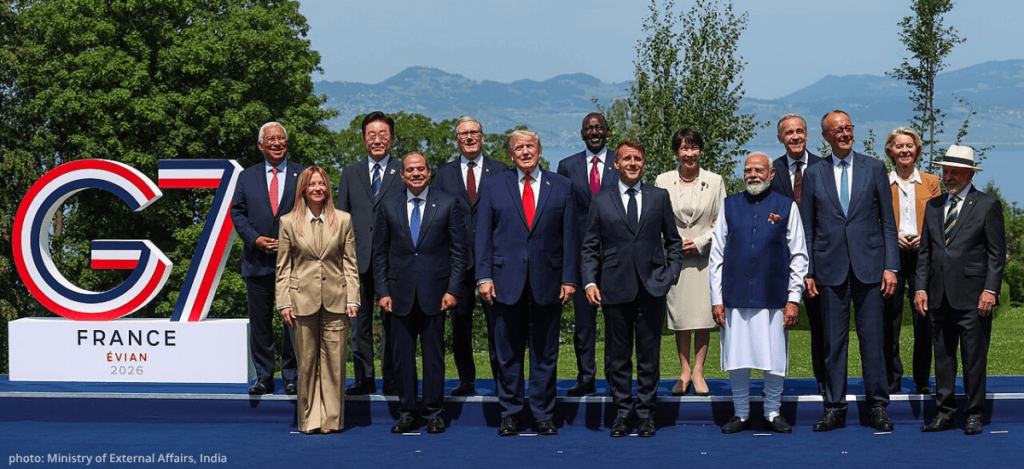
As the current Ebola outbreak continues to spread in the Democratic Republic of the Congo and Uganda, strong political will to stop and prevent epidemics is more pressing than ever. As the G7 Summit wrapped yesterday, the world leaders released an Ebola declaration, providing reason for cautious optimism.
The G7 committed to addressing the current outbreak by supporting contact tracing, surveillance, testing, community engagement, cross-border preparedness, and the development and delivery of vaccines, diagnostics, and treatments. This communiqué follows Canada's recent funding announcement to help contain the outbreak, as well as other G7 countries efforts to respond to this deadly crisis before it becomes an epidemic or pandemic.
In the weeks leading up to the Summit, Results volunteer advocates took the media by storm, calling on Canada to lead on pandemic preparedness, prevention, and response (PPPR) at the G7 and invest in the Coalition for Epidemic Preparedness (CEPI). A new pledge to CEPI could help ensure the world has safe, effective vaccines within 100 days of the next pandemic threat. Results urged G7 governments to support a coordinated response to the Ebola outbreak and strengthen global preparedness for future health emergencies, alongside more than 300 organizations in the G7 Civil Society Engagement Group (C7).
And while the push for a new CEPI pledge continues, the call for a coordinated response to the Ebola outbreak was heard.
The commitments by the G7 leaders recognize an important reality: diseases do not respect borders. To protect communities everywhere, we need resilient health systems, and a rapid, coordinated response capacity.
The Ebola response was not the only encouraging signal to emerge from this year’s Leaders' Summit. As part of the C7, Results joined partners in calling on G7 leaders to reverse cuts to international assistance, and invest in health, food, nutrition, education, water and sanitation, and social protection services, particularly for the world's most marginalized communities. The G7 countries are currently on track to cut international aid by a whopping 28% compared to 2024, the largest cut in recent memory.
As a result, France elevated international solidarity as a priority of its current G7 presidency, calling for a “new consensus on fairer, more effective, better coordinated international partnerships.” The inclusion of international cooperation in the G7 agenda marks important progress, as last year’s discussions focused on technology, critical minerals, and security, with little attention paid to the role of solidarity in addressing global challenges.
The G7 Leaders' declaration on mutually beneficial international partnerships reaffirmed the importance of international development and investment finance, recognized official development assistance as a key tool alongside private sector resources, and committed to improving the international cooperation system. Leaders also pledged to focus on financing with little or no interest where it is most needed, support public financing of services in lower-income countries through taxation and debt restructuring, while investing in health, education, nutrition, early childhood development, and food systems.
These commitments reflect priorities Results Canada and our partners have championed for years and acknowledge that international development remains essential to shared prosperity and resilience.
The focus of the Ebola declaration is outbreak response, but this is only part of the solution. Preventing future crises remains both the most effective and efficient approach. Without a plan, pandemics could cost the world US$700 billion per year and risk the lives of millions.
The upcoming G20 Foreign Ministers’ meeting – to be convened by the United States to discuss further collective action and secure broader financial support for the response – is an opportunity for Canada and its partners to explicitly endorse the 100 Days Mission and commit to predictable financing for PPPR. Canada has an opportunity to demonstrate leadership through a new $125 million, five-year pledge to CEPI, helping ensure safe and effective vaccines can be developed within the first 100 days of the next pandemic.
Finally, as G7 countries pursue development reform, reversing international assistance cuts must remain a priority, and private finance should complement, not replace aid. Reforms must reinforce transparency, accountability, genuinely concessional financing, and country ownership.
The G7 has signaled that global health and international development matter. The challenge now is turning those commitments into meaningful action before the next crisis arrives.