




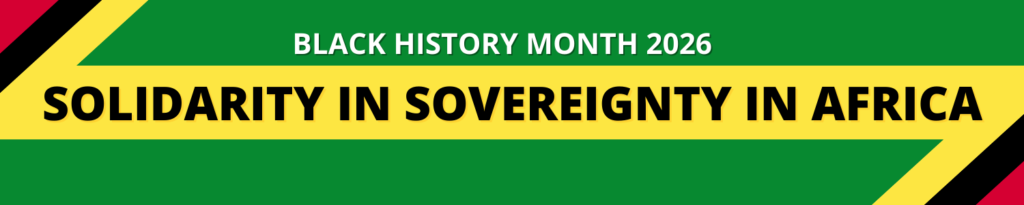
“Solidarity in Sovereignty in Africa” is a call to action for the global community to stand with African nations by respecting and upholding their sovereignty – while recognizing that international assistance remains essential to enable low-income countries to invest the resources needed to close equity gaps and eradicate poverty. To be effective, this support must champion Africa-led priorities, decision-making, and solutions, respond to local needs and contexts, and recognize African leadership as central to shared global progress. Our Senior Policy and Advocacy Officer Dominique opens the series with her reflections on this theme.
As someone who exists between cultures, I have always been fascinated by how identity is shaped, and challenged, by how we understand ourselves and how others perceive us.
In Canada, Haitians often recognize shared features and sometimes speak to me in Creole, a language I don’t fully master. Yet in Haiti, I am considered white. The same is true in Africa. Through conversations with other Afro-descendants, I came to realize that this perception is not simply about skin tone. It is about becoming strangers throughout history. About how a shared past diverged, and how each version of that history continued to evolve on opposite sides of the Atlantic.
Black History Month was created in the United States to elevate the history and contributions of Black communities to the societies in which they live. This effort was critical not only in confronting prejudice and the systemic racism of the Jim Crow era, but also in empowering Black communities as they reclaimed their histories, affirmed their cultures, and resisted attempts at erasure.
The Pan-Africanist movement referenced by the colours of this blog series emerged around the same period, shaped by intellectuals from the United States, the Caribbean, and Africa. Rather than focusing solely on recognition within existing systems, Pan-Africanism sought to challenge racial segregation and colonial domination through the reclamation of a shared identity and the pursuit of collective emancipation across the Black world, by political, cultural, and economic means.
In the era of African States’ independence, Pan-Africanism became a political project on the continent itself, aimed at resisting neo-colonial imperialism through African unity. The decades that followed demonstrated both the deep solidarity among liberation movements in the Americas, and Africa, and the growing ambition of African unity. This vision gradually took more concrete form through the creation of the African Union – a continental body bringing together African states to promote cooperation, integration, and collective political and economic action – and later through the adoption of Agenda 2063, its long-term framework for inclusive and sustainable development rooted in Pan-African ideals of unity, self-determination, freedom, progress, and shared prosperity.
Yet more than a decade after the launch of Agenda 2063, Africa faces significant barriers to realizing this vision. Over the past year alone, cuts to international assistance have dramatically reduced access to health and nutrition services for women and children, putting the lives of more than 22 million children at risk by 2030, most of them in Africa, and depriving children in the most fragile contexts of access to education.
Despite these challenges, Africans and Afro-descendants continue to mobilize, drawing on every tool and form of power available to meet the needs of their communities – whether as advocates, health workers, or senior public servants.
This month, we are highlighting their stories. They reflect the enduring ties between Africa and its diasporas, the unbreakable solidarity within the continent itself, and the efforts led by and for all Afro-descendant communities to advance a form of development that truly benefits everyone.
Follow us for more stories of hope and determination - dropping every week during Black History Month!